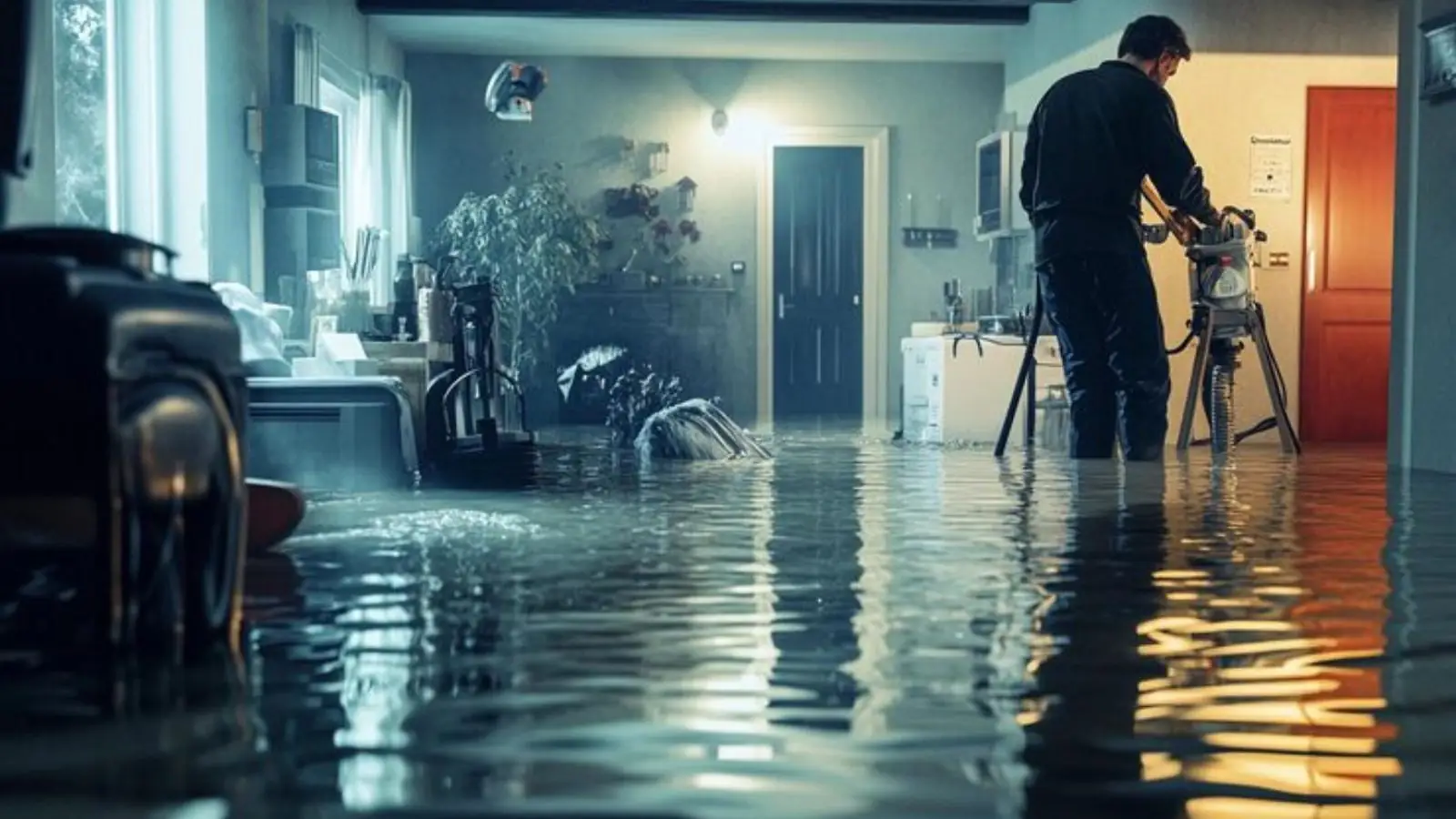
Water is moving through your house right now, and mitigation is the work that stops it from getting worse. The emergency line is open 24/7, so call at any hour. While you wait, shut off the main water valve, lift valuables off wet floors and keep people and pets out of any water that may be contaminated.
If water reached outlets or the electrical panel, do not step into it. Call the electric utility or 911 before you call us, and only cut power at a panel you can reach dry and safely.
My wall is wet and the floor feels soaked. What is happening?
That feeling means water has moved past the visible stain. It travels along studs, wicks up drywall and soaks into the subfloor, so the wet area is nearly always larger than the damp patch you can see. The trade name for the fix is water mitigation, and it is the work of finding all the wet material and drying it quickly.
A damp wall left alone for a few days usually leads to a musty smell and then to mold, which is a different and larger job.
What mitigation covers in the first 72 hours
Stop the source
Shut off the main valve and isolate the broken line or appliance.
Map the moisture
Meters and thermal imaging show wet drywall, insulation and subfloor.
Extract and open up
Standing water is pulled out and wet materials that cannot dry are removed.
Dry and monitor
Air movers and dehumidifiers run while readings are logged each visit.
Under ANSI/IICRC S500, the published water damage standard, drying is documented with readings so you can see progress. The log also helps if your insurer asks what was done.
Equipment is chosen for the room, not guessed. A damp bedroom and a soaked living room need different airflow and different dehumidifier capacity.
Structural drying: how equipment does the work
Structural drying moves water out of wood, drywall and concrete with air and dehumidification. Air movers push dry air across wet surfaces, and low-grain refrigerant (LGR) dehumidifiers pull the moisture out of the air so it cannot settle back. Some wall cavities are drilled or opened a small amount so air can reach them.
Drying commonly runs several days, and thick materials such as hardwood, plaster or concrete can take longer. Equipment stays until the final readings match the dry reference, not until a calendar date.
| Equipment | What it does | Where it goes |
|---|---|---|
| Moisture meter | Reads moisture inside materials | Walls, floors, framing. |
| Thermal imaging camera | Shows temperature patterns that point to wet areas | Ceilings, walls, floors. |
| Air movers | Push air across wet surfaces | Floors and wall bases. |
| LGR dehumidifier | Removes moisture from the air | Room or zone being dried. |
| Extraction unit or wet vac | Pulls up standing water and wet carpet water | Carpet and hard floors. |
Water still spreading?
The line is open now. Stop the source and call.
When standing water is an emergency
Treat it as an emergency if water is still flowing, if it has reached more than one room, if it rose from a drain or toilet, or if any of it touched electrical outlets. Water that comes from a drain or from outdoors is not clean, and carpet, pad and drywall that soaked it are usually removed instead of dried.
After hours and weekends are the same as any other time for the line. Same-day response is offered when available, and dispatch tells you honestly what is possible that day.
What drives the price of mitigation
The scope depends on the water category, the area affected, the materials involved, the number of drying days and the equipment needed, and how much demolition is required before rebuilding. The scope and price are explained before work starts. Your own policy decides what is covered, so ask your insurer, and note that flood damage usually requires separate flood coverage.
Duncanville weather and why drying speed matters
The National Weather Service reports that Dallas and Fort Worth average 29 freezes a season, and that summer humidity stays high from Gulf moisture. A pipe that cracks in a freeze often shows up after the thaw, and a wet wall in July dries slowly in humid air without equipment. Both are reasons crews start drying equipment right away instead of waiting for the air to do the work.
We cover ZIP codes 75116 and 75137 in Duncanville, and the same crews reach DeSoto and nearby towns. After the structure is dry, water damage repair rebuilds what was removed, and mold remediation is added only if mold is found.
Frequently Asked Questions
Mitigation is the first phase: stop the source, remove water and dry the structure. Restoration is the whole process, including repair, and the homepage explains both.
It commonly takes several days, and thick materials take longer. The crew logs moisture readings each visit and stops only when they match the dry reference.
Household fans help a little with a small spill. They do not remove moisture from the air or reach wall cavities, so serious water needs dehumidifiers and air movers.
Yes. The emergency line answers 24 hours a day, every day, and crews can be dispatched after hours when available.
Only if the panel is dry and you can reach it safely. If water touches outlets, the panel or appliances, stay out and call the utility or 911 first.
Fast, complete drying removes the moisture mold needs. It lowers the chance of mold, but no one can promise mold will never appear.