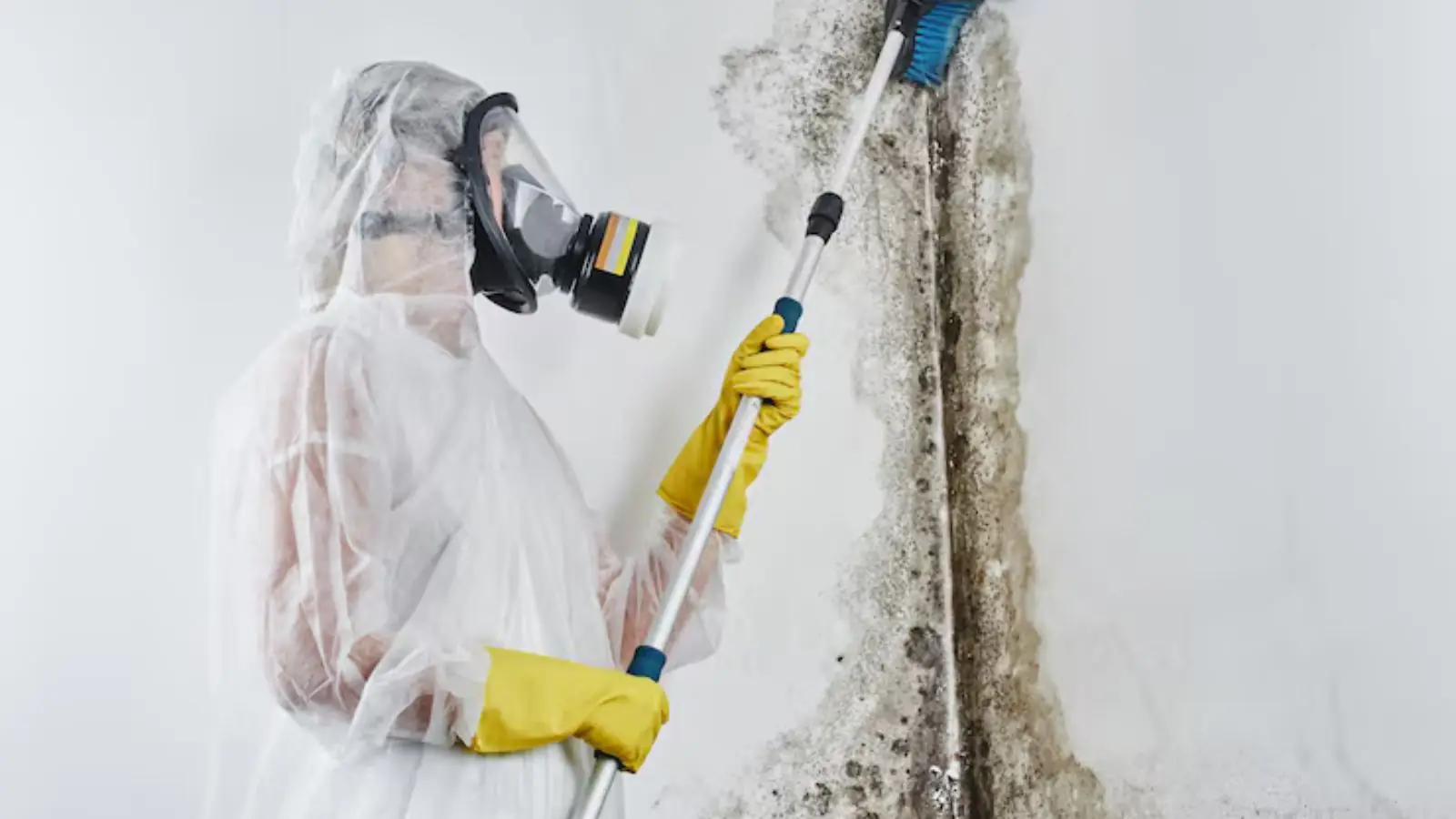
Mold remediation in Duncanville, TX deals with the mold that grows once moisture has sat on a surface. It is the secondary service on this site, because most mold starts with a leak, and the leak is the first thing to fix. If water is still present, call the emergency line and start with drying.
Mold needs moisture. That is why a leaking toilet, an air conditioner condensate line, a roof leak or a soaked closet carpet can turn into dark spots on a wall within days. We do not diagnose health problems. Questions about symptoms belong with a physician.
I see dark spots or smell something musty. What is it?
Spots on a ceiling corner, a musty closet or a smell near a basement stair can mean mold, mildew or just dirt. A moisture reading and a visual check tell you whether there is a wet source behind it. If there is, the fix is to stop the water and then deal with the growth.
The trade name for that work is mold remediation. It is a planned job with containment, not a spray-and-wipe.
Mold removal and black mold cleanup
Remediation follows the ANSI/IICRC S520 standard. The area is sealed with containment barriers, air is filtered through HEPA units and removed under negative air where needed. Contaminated drywall, insulation or carpet is cut out and bagged. Surfaces that can be cleaned are HEPA vacuumed and cleaned.
Black mold is a common name for a dark mold that people find on ceilings, walls and wood. The color alone does not tell you the species. The job is the same: fix the moisture and remove the growth.
Mold after water damage
The fastest way to avoid a mold job is to dry quickly after a leak. Federal guidance often cited by restoration firms is to dry wet materials within 24 to 48 hours. When drying was late or incomplete, water mitigation may still be needed to clear remaining moisture.
Once the moisture is under control, remediation removes the growth, and water damage repair rebuilds the drywall and finishes. We cannot promise mold will never come back, but fixing the moisture gives it nothing to feed on.
| Situation | Likely first step | Who is involved |
|---|---|---|
| Small patch from a known past leak | Fix leak, dry, clean or remove the patch | Homeowner or remediator depending on size. |
| Spots on a ceiling after a roof leak | Roofer fixes the leak, then mold is addressed | Roofer, remediator, repair crew. |
| Musty smell with no visible source | Moisture mapping and inspection | Assessor and remediator are separate in Texas. |
| Buyer or lender requires clearance | Assessment, remediation, then certificate | Licensed assessor and licensed remediator. |
What to do before the crew arrives
- Fix or stop the moisture source first, since mold needs water to keep growing.
- Do not disturb the growth, sand it or blow air across it.
- Keep people and pets out of the affected room.
- Photograph the area and note when you first saw it.
- Ask any company for its TDLR license number and verify it with the state.
Mold after a leak?
Call to talk through what the growth means for the scope.
Testing, clearance and the Texas rules
Texas licenses mold assessors and mold remediators through the Texas Department of Licensing and Regulation under Occupations Code Chapter 1958. A license holder may not do both the assessment and the remediation on the same project. Ask any company for its TDLR license number and verify it with the state before work starts.
Before mold work begins, the client must receive the TDLR Consumer Mold Information Sheet. After remediation, the owner receives a Certificate of Mold Damage Remediation, which includes a statement by a licensed assessor that the contamination was remediated. A seller must give a buyer certificates issued in the previous five years.
Remediation affecting less than 25 contiguous square feet has an exemption from licensing. Home buyers and lenders sometimes require clearance testing before closing, so ask what your lender needs and have an independent assessor do the testing.
What changes the price of mold work
The scope depends on the area affected, the materials involved, the containment and air filtration needed, whether the moisture source is fixed, and how much rebuild follows. Insurance may cover mold that resulted from a covered water loss, but policies often limit mold coverage, so read yours and ask your insurer. The scope and price are explained before work starts.
Serving Duncanville and nearby towns
We serve ZIP codes 75116 and 75137, and nearby towns including Cedar Hill and Lancaster. Homes in Duncanville often have older ducts and bath fans, so ask about moisture control in bathrooms and closets.
Frequently Asked Questions
Yes. The Texas Department of Licensing and Regulation licenses mold assessors and remediators under Occupations Code Chapter 1958, and remediation under 25 contiguous square feet has an exemption. Ask for a license number and verify it with TDLR.
Not on the same project. Texas rules do not allow a license holder to do both the assessment and the remediation on one project.
No one can promise that. Mold needs moisture, so fixing the leak and drying the structure removes what it feeds on.
It documents that remediation was completed, with a statement from a licensed assessor. Sellers pass recent certificates to buyers.
The emergency line is open 24/7. Active water gets drying first, and mold work is scheduled after the moisture is under control.
We do not make health claims. Health questions belong to a physician, and a licensed assessor can test the home.
Sometimes. Sellers must give buyers any Certificate of Mold Damage Remediation issued in the previous five years, and buyers or lenders may ask for independent clearance testing before closing. We cannot say what your lender will accept, so ask the lender first and use a licensed assessor who is separate from the remediator.
Call and describe what you see. We offer same-day response when available and do not promise an arrival time. The scope and the price are explained before any work starts.