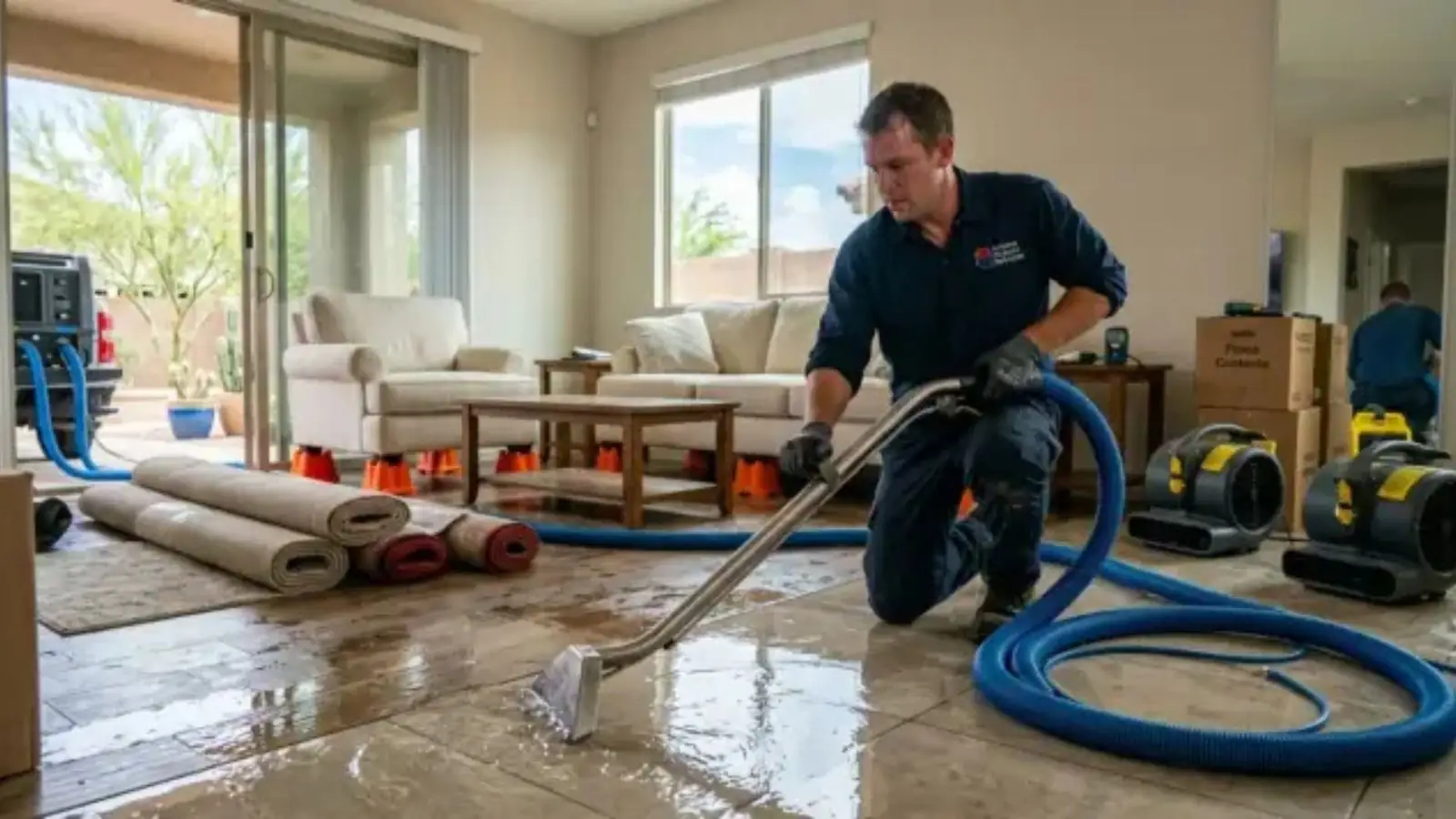
If you have water standing on the floor, this is the page and the 24/7 emergency line is the next step. Standing water is the fastest way for damage to reach subfloors, cabinets and walls, so extraction comes before anything else.
Before the crew arrives, shut off the main water valve, switch off power to wet areas only if the panel is dry and safe to reach, and keep people and pets out of any water that may be contaminated. If water is near outlets, appliances or the panel, call the electric utility or 911 first.
Standing water: what the crew does on arrival
The crew confirms the source is stopped, checks for electrical risk, then removes the water. Shallow water on hard floors goes to wet vacuums. Deeper water or water in carpet goes to submersible pumps and extraction units that pull water and let the room begin to drain.
Extraction is not the end. Water already in the subfloor and wall bases stays behind, so drying equipment goes in next. That second phase is water mitigation, and the two usually happen on the same visit.
| Situation | Typical tool | Why |
|---|---|---|
| Thin film on tile or vinyl | Wet vacuum | Fast pickup without disturbing the floor. |
| Water soaked into carpet and pad | Extraction unit | Pulls water out of fibers and pad. |
| Several inches standing in a room | Submersible pump | Moves large volume quickly. |
| Water under flooring or inside walls | Drying equipment after extraction | Extraction cannot reach trapped water. |
Burst pipe water damage
A burst pipe under a sink, behind a wall or in an attic can release gallons a minute. Find the main shutoff first, turn it clockwise to close it, then open a low faucet to drain the lines. Photograph the damage before moving anything, because the pictures help an insurance claim.
Crews then extract the water, open the wall or ceiling where the pipe failed and dry the cavity. The plumber repairs the pipe, and we handle the water. We do not replace a plumber's work, and an honest crew tells you when a plumber has to come first.
The City of Duncanville also takes after-hours water emergencies at (972) 780-4959, which is useful if you cannot find your shutoff or the main line has failed outside the house.
What to do before the crew arrives
- Stop the source if you can reach it, starting with the main water shutoff.
- Cut power to wet rooms only if the panel is dry and you can reach it safely.
- Keep people and pets out of any water that may be dirty.
- Photograph the damage before anything is moved.
- Call the emergency line and describe what you see.
Pipe burst or water rising?
Call the emergency line now. Dispatch will walk you through the first steps.
When it is an emergency and when it is not
Treat it as an emergency when water is still flowing, covers a floor in more than one room, came up through a drain or toilet, or reached electrical outlets. A small spill you can mop in minutes is not. A spill that soaked carpet pad or ran under a wall is, even if the top looks dry.
Sewage and creek water are Category 3 under the ANSI/IICRC S500 standard and need extra protection. In that case the plan moves toward flood damage restoration and removing porous materials.
Cost factors for water extraction
Price depends on the depth and area of the water, the category, the materials soaked, how many hours of extraction and drying equipment are needed, and what must be removed. The scope and the price are explained before work starts. Exact figures come after the crew has seen the room.
Insurance may cover sudden and accidental losses, and flood usually needs its own policy. Check your policy and ask your insurer, and keep photos of the water before it is removed.
Serving Duncanville and the towns around it
Our office is at 920 E Highway 67, in ZIP code 75137, and calls from 75116 are handled the same way. Crews also reach Lancaster and Grand Prairie along the US 67 and I-20 corridors, and after the water is out the cleanup step removes soaked materials.
Frequently Asked Questions
We offer same-day response when available and do not promise an arrival time. Dispatch gives you a straight answer on the call.
Yes. The emergency line is open 24 hours a day, every day, including holidays.
No. Water from drains, toilets with waste, or outdoor flooding can carry bacteria. Keep people and pets out and wear protection if you must enter.
The pad and subfloor may still be wet. A moisture meter tells you what the eye cannot, and drying equipment usually follows extraction.
Yes, if you can reach it safely. It stops the flow so extraction can start. If you cannot find it, call the line and the City of Duncanville after-hours water number.
Extraction removes standing water, but moisture in materials needs drying too. Fast drying lowers the chance of mold, though nobody can promise it will not appear.