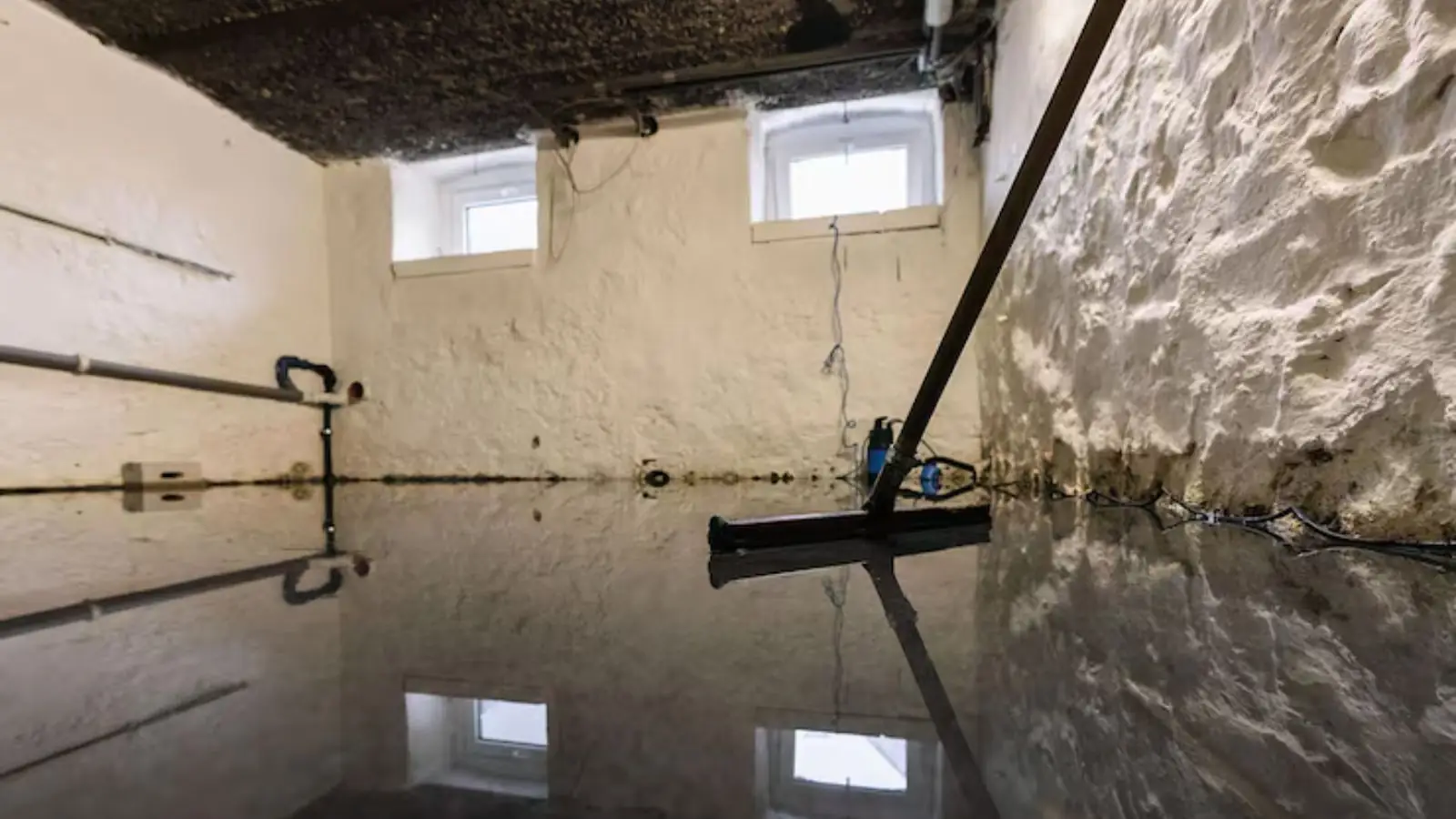
Water damage in a basement means water has soaked the floor, walls or contents of a lower level, and the fix starts with stopping the source and getting the water out within a day or two. Wet drywall, carpet pad and framing hold moisture quickly. The longer they stay wet, the more of them end up removed instead of dried. If your home has a basement, walkout lower level or crawl space, treat any standing water as urgent.
Call the 24/7 emergency line at (972) 945-2885 if the water is more than a puddle or you cannot find where it is coming from.
Signs that water is already in the lower level
Some signs are loud, like water running down a wall or a pool around the floor drain. Others are quiet. You may notice a musty smell, paint that bubbles or peels, white mineral crust on concrete, baseboards that lift away from the wall, or carpet that feels cold and damp.
- A floor that is wet in the same spot after every storm.
- Drywall that feels soft near the bottom edge.
- Rust on the legs of a furnace, water heater or shelving.
- A damp smell that gets stronger when the air conditioner runs.
- Stains that climb a wall in a tide-line pattern.
A moisture meter and a thermal imaging camera can find water you cannot see behind finished walls. Thermal images show cool, wet areas as a different color, which tells the crew where to open up and where to leave things alone.
Where the water usually comes from
North Texas gets about 37 inches of rain a year, and spring and fall are the wettest seasons. A hard storm can push water through window wells, cracks in a foundation wall or a poorly sloped yard. Water also shows up from inside the house, so look at the plumbing before you blame the weather.
- Heavy rain and poor drainage around the foundation.
- A burst or leaking supply line, or a failed water heater.
- A washing machine hose or dishwasher line that let go.
- A sump pump that stopped working or lost power.
- A sewer line that backs up through the floor drain.
Each source brings a different kind of water, and that matters more than the amount. The table below shows how the three water categories are sorted and what each one does to the materials in your lower level.
Water categories and what they do to materials
| Water category | Where it comes from | What happens to materials |
|---|---|---|
| Category 1 (clean) | Broken supply line, overflowing sink, rainwater at first | Most materials can be dried in place if the crew acts quickly. Carpet and pad often survive. |
| Category 2 (gray) | Washing machine or dishwasher discharge, sump pump failure with dirty water | Porous items like carpet pad and insulation are usually removed. Hard surfaces get cleaned and dried. |
| Category 3 (black) | Sewer backup, rising flood water, long-standing stagnant water | Porous materials are removed, framing is cleaned and treated, and the area is dried and disinfected. |
Clean water can slip into a higher category if it sits for a couple of days or crosses dirty ground.
What to do in the first hour
Safety and first steps
- Stop the source if you can, starting with the main water shutoff.
- Turn off power to the area only if you can reach the panel while dry.
- Stay out of standing water if outlets, cords or appliances are touched by it.
- Call 911 or the utility first if you smell gas or see sparking.
- Keep children and pets out of any water that may be sewage.
- Take photos and short videos before moving anything.
- Lift small valuables and paper to a dry upper shelf.
- Call the 24/7 emergency line for extraction and drying.
Water in the lower level right now?
Call (972) 945-2885 and ask about same-day response when available.
What drying a lower level actually involves
Drying follows a clear order. A crew first removes standing water with submersible pumps and extraction units, then pulls out materials that cannot be saved, such as soaked carpet pad and wet insulation. After that comes the slow part, which is moving air and removing moisture from the space.
Extract
Pumps and wet vacuums remove standing water from the floor.
Remove
Unsalvageable drywall, pad and insulation come out, sometimes with a flood cut.
Dry
Air movers and LGR dehumidifiers run while moisture readings are logged.
Verify
Readings are checked against dry standards before anything is closed up.
Most lower levels need several days of equipment, because concrete and framing release moisture slowly. A drying log with daily readings is how you know when the job is done, so ask any company to show you theirs. Industry practice is set out in ANSI/IICRC S500, and you can ask whether a crew works to it. Our page on flood damage restoration explains the larger jobs in more detail.
Duncanville sewer overflows, flood maps and who to call
If water comes up through a floor drain or toilet in a lower level, the problem may be in the sewer line instead of the roof or plumbing. Duncanville Public Works Wastewater can be reached at (972) 780-4900 for sewer problems, and calling them helps you learn whether the city main is involved before you pay for a private line inspection.
In 2023 city crews responded to a sanitary sewer overflow near Tenmile Creek and Stewart Branch on the south side of Harrington Park. The city told residents to avoid contact with waste material, soil or water in that area, so treat sewage at home the same way and keep pets and kids out. Check the FEMA Flood Map Service Center for your address before you decide how much to invest in finishing a lower level.
When another trade or a longer fix is the right call
Restoration dries and rebuilds what water damaged. It does not waterproof a foundation, and we do not replace a plumber, so a failed pipe or a cracked sewer line still needs that trade. If the same wall gets wet after every storm, a drainage or foundation specialist should look at the cause before you rebuild.
We also serve nearby towns, and homeowners in Grand Prairie and Lancaster often face the same lower-level problems after the same storms.
How to protect the lower level before the next storm
A few habits cut risk. Keep gutters clear, point downspouts away from the foundation, and test a sump pump if you have one by pouring in a bucket of water. Store boxes on shelves or plastic racks instead of directly on the floor, and replace old rubber washing machine hoses.
Frequently Asked Questions
Mold needs moisture, and wet drywall, wood and carpet can support growth if they stay damp for a couple of days. That is why speed matters more than anything else. Drying quickly and removing soaked porous materials gives growth the least chance to start.
For a small clean water spill on a hard floor, yes. For anything deeper, or anything that reached walls or carpet, home fans leave moisture trapped in the framing. Professional air movers, LGR dehumidifiers and moisture meters are built for that job.
Yes. It is Category 3 water, which means porous materials are usually removed instead of dried. Keep people and pets away from it, and do not use fans to dry it yourself before a crew assesses the space.
Start with Duncanville Public Works Wastewater at (972) 780-4900 to ask about the city sewer main. If the city main is clear, a plumber checks your private line. Call our 24/7 emergency line for extraction and drying while that gets sorted.
The method is similar, but access is tighter. Crews use smaller pumps, set air movers where they fit, and check the floor framing and insulation above. Standing water in a crawl space should be dealt with quickly because it can travel up into the subfloor.