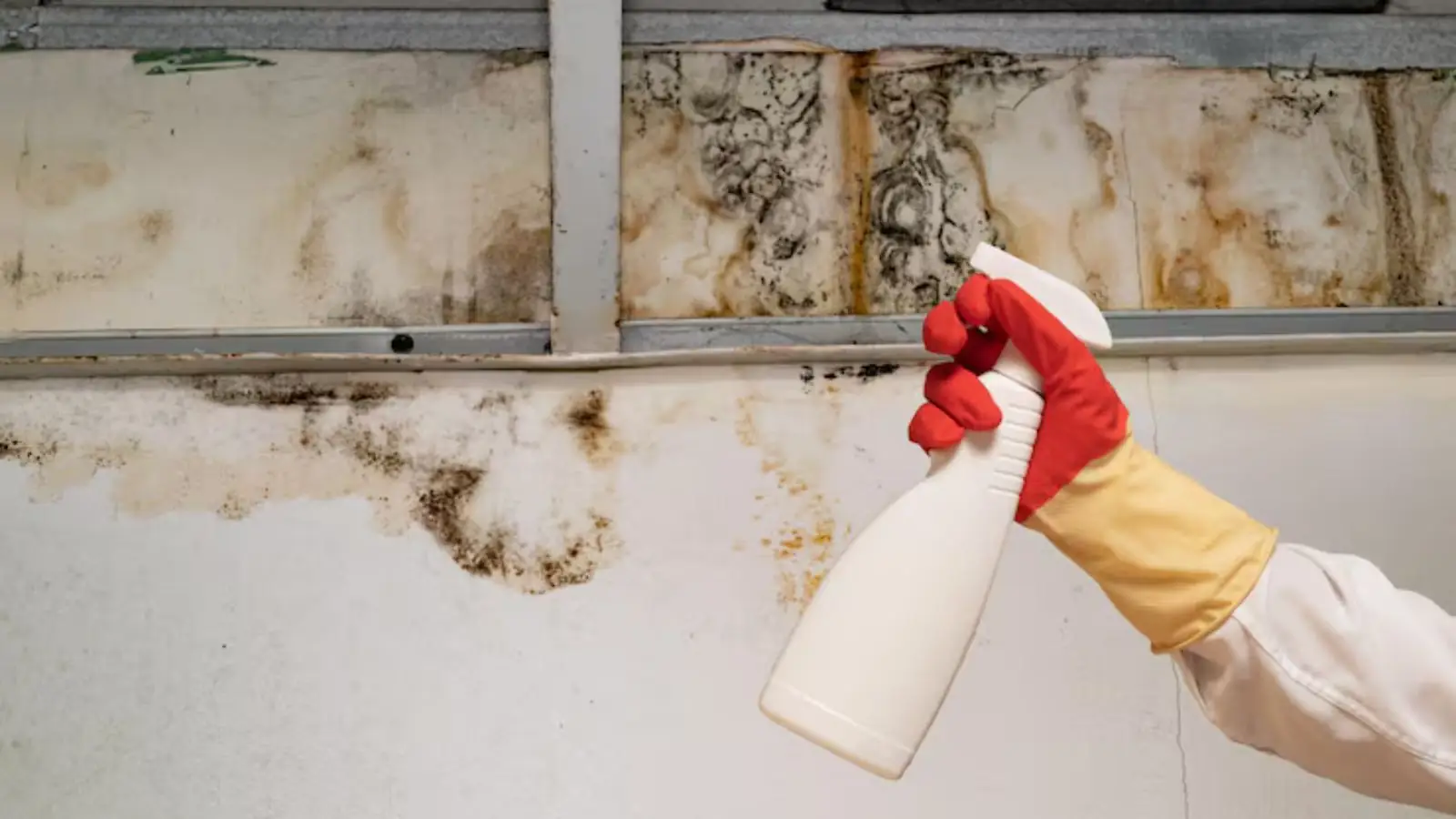
For mold on hard, nonporous surfaces like tile, glass and sealed plastic, detergent and water is a solid first choice. Vinegar, hydrogen peroxide and commercial mold cleaners also have a place. On porous materials like drywall, carpet and ceiling tile, no product reaches the roots, so those materials are removed.
Products clean growth. They do not stop the water that started it. If the area stays damp, mold comes back no matter what you spray.
Match the product to the surface
| Product type | Best for | Cautions |
|---|---|---|
| Dish detergent and water | Tile, glass, sealed plastic, painted trim | Scrub, rinse and dry fully. It will not clean porous drywall. |
| White vinegar | Light growth on hard surfaces | Never mix with bleach. It can harm stone and some finishes. |
| Hydrogen peroxide (3 percent) | Grout, caulk edges and light stains | Can lighten fabric and finishes. Test a hidden spot first. |
| Household bleach | Nonporous surfaces only | Never mix with ammonia or vinegar. Strong fumes, keep the area ventilated. |
| Commercial mold cleaners | Specific surfaces named on the label | Follow the label. Wear gloves and eye protection. |
| Baking soda paste | Gentle scrubbing on tile or plastic | Not for porous material. Rinse well. |
Read the label on any product and never combine two cleaners.
Using a product the right way
Start with the mildest option. Mix a few drops of dish detergent into warm water, wipe the area with a cloth or soft brush, and rinse with clean water. Then dry it with a towel and run a fan, and keep the room ventilated until it feels fully dry to the touch. Drying matters as much as washing, because a damp surface invites regrowth.
If detergent does not lift the stain, try hydrogen peroxide or a commercial cleaner on a small test spot and follow the label for dwell time. Stains can remain after the growth is gone, especially on grout. A faint shadow is not always live mold, but a musty smell is a reason to look further.
Why porous materials are different
Mold grows into porous materials. A spray on drywall wets the face of the board and leaves the paper backing and the gypsum behind it damp. That can feed mold instead of stopping it. Carpet pad, insulation and ceiling tile act the same way.
A rough test: if water soaks in and darkens the material, it is porous. If it beads on top, it is nonporous. Porous items that are moldy are normally bagged and thrown out, and the cavity is dried.
Safety before you open any bottle
Before you clean mold
- Ventilate with a window or exhaust fan, and keep the door closed to other rooms.
- Wear rubber gloves, eye protection and a mask rated for fine particles.
- Never mix bleach with ammonia, vinegar or other cleaners.
- Do not spray dry mold, since it can spread spores.
- Keep kids, pets and anyone with health concerns away.
- Bag moldy rags and debris before carrying them out.
This is not health advice. If anyone in the home has breathing problems or other concerns, ask a physician. For large areas, the work should be done by a licensed remediator.
Mold keeps coming back?
A moisture reading finds the cause. Call (972) 945-2885, open 24/7.
Sprays, fogs and paint additives
Some products promise to block mold or kill it in the air. Surface sprays and paints with additives treat the outer layer only. They do not dry a wall, replace wet insulation or fix a leak, and they should never be a stand-in for removal when material is soaked through.
If a company suggests fogging or spraying as the whole plan, ask what moisture readings it took and whether it works to ANSI/IICRC S520. A good plan names the source, the dry-out and the removal steps.
The moisture problem behind the mold
Mold needs moisture. A leaking pipe, a roof stain, a window that sweats or a slab that stays damp will outlast any product. Fix the source first, then dry the area completely with air movers and an LGR dehumidifier if needed.
Water damage cleanup is the right call when the mold sits on top of a wet event, because extraction and drying happen before cleaning. If the growth covers more than a small area, mold remediation follows ANSI/IICRC S520 practice with containment and HEPA air scrubbers.
Texas rules in plain terms
Texas exempts mold remediation under 25 contiguous square feet from licensing, so a small cleanup on your own bathroom wall is a homeowner job. Larger jobs go through a licensed remediator, and a separate licensed assessor writes the assessment. One license holder may not do both on the same project.
Before work begins you should receive the TDLR Consumer Mold Information Sheet. After remediation, you get a Certificate of Mold Damage Remediation. Ask any company for its TDLR license number and verify it.
Duncanville storm drains and where wash water goes
Duncanville runs a city stormwater management plan with illicit discharge detection, and it is a Phase III small MS4 with TCEQ permit authorization in 2025. In plain terms, storm drains lead to creeks, not a treatment plant. Pouring wash water or leftover chemicals down a storm drain or into a gutter is the wrong move.
Use a sink or toilet for rinse water from cleaning, and keep leftover bleach or cleaners sealed until you know how to dispose of them. For household chemicals, ask the city. City Hall at (972) 780-5000 can point you to the right department. We do not claim the city runs any particular drop-off program.
We cover projects in neighboring towns too, including homes in Cedar Hill and across Lancaster, with the same approach.
Frequently Asked Questions
On painted drywall, a damp cloth with detergent for light surface spots, and cut out anything soft. On tile, detergent first. If the wall is soft or stained through, products will not fix it.
Vinegar is gentler and works on light growth. Bleach is for nonporous surfaces and has strong fumes. Never combine them, because mixing creates a dangerous gas.
Not before cleaning and drying. Paint hides the stain but does not remove growth or fix moisture. Clean, dry and repair first.
Not in a storm drain or creek. Duncanville runs a stormwater program with illicit discharge detection, so use a sink or toilet for rinse water. For leftover chemicals, ask the city at (972) 780-5000 how to dispose of them.
When the growth covers a large area, returns after cleaning, sits on drywall or wood, or follows a wet event. Anyone with health concerns should ask a physician too.