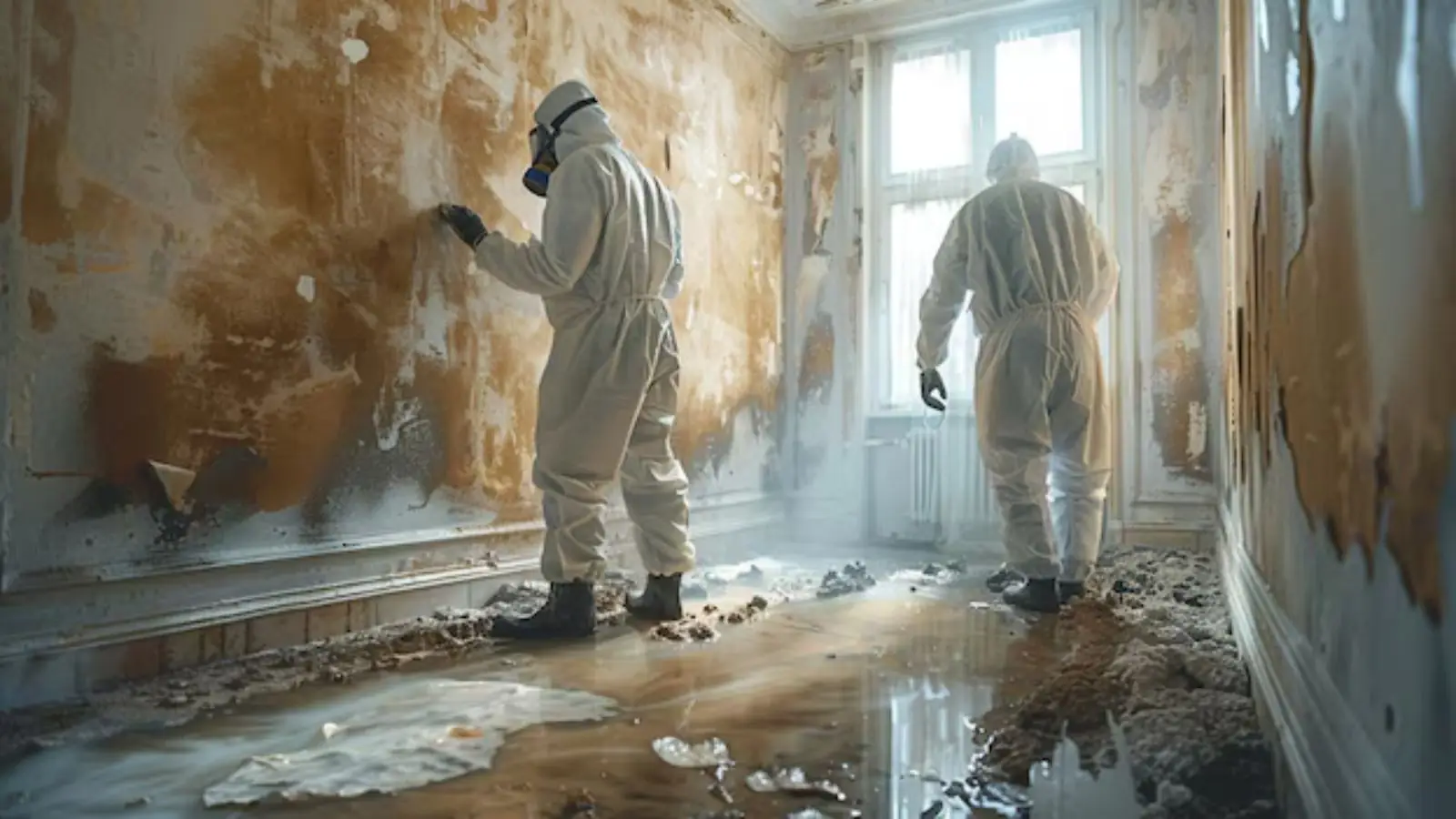
You do not simply kill mold and walk away. Dead mold still sits on the surface, and moisture feeds new growth. The real answer is three steps: control the moisture, clean or remove the growth, and keep humidity down afterward. If your home has a basement, walkout lower level or crawl space, this applies there, and a damp lower level is the usual starting point.
Killing versus removing
Many products claim to kill mold. Killing it on a hard surface can work, but the spores and residue remain and need to be wiped and bagged. On porous materials like drywall, carpet, wood framing and insulation, a spray cannot reach what has grown inside.
Remediation means physically removing the growth and damaged material, drying the space and cleaning surrounding areas. It follows ANSI/IICRC S520 practice, and you can ask any company whether its crews work to that standard.
Moisture control matters most
Mold needs moisture, so it appears where the lower level stays damp. Common sources include plumbing leaks, a failing water heater, a sump or drain problem, condensation on cold pipes and humid air that has no way out.
Check for signs: a musty smell, dark patches near the floor, damp carpet edges, peeling paint, and water stains on foundation walls. A moisture meter can confirm where the dampness is.
| Approach | Works on | Limits |
|---|---|---|
| Dehumidifier | Humid air in a lower level or crawl space | Does not remove growth or fix a leak. |
| Detergent cleaning | Small growth on hard, non-porous surfaces | Cannot reach inside drywall or wood. |
| Antimicrobial treatment | Surfaces after growth is removed | Not a substitute for removal or drying. |
| Removing damaged material | Soft drywall, carpet, wet insulation | Needs containment and disposal. |
| Fixing the leak | The cause of repeated growth | Done by a plumber or the right trade. |
Whether a job is small or large depends on how much area is affected and what the moisture readings show.
Using a dehumidifier in a lower level or crawl space
A dehumidifier keeps relative humidity low, and many people aim for about 50 percent or less. Set it where air can circulate, keep doors to the area closed so it works on one space, and empty the tank or run it to a drain.
In a crawl space, pick a unit rated for the conditions and keep access safe. A dehumidifier controls humidity but does not remove existing growth, and it will not fix standing water or a leak.
Place a hygrometer in the room so you can see the humidity number instead of guessing. It is an inexpensive meter that reads humidity. Check it a few times a week, especially after rain or on muggy summer days. If the reading climbs even with the unit running, something is still adding moisture, and that is a signal to look for a leak or call for a moisture survey.
Basement damp and musty?
Call (972) 945-2885 and we will arrange a look at the moisture and the growth.
Cleaning agents in general terms
For a small area on a hard surface, a household detergent and water, a stiff brush and a clean cloth are the basic tools. Wear an N95 respirator, goggles and gloves, and ventilate. Bag the cloths when you finish.
Never mix chemicals. Bleach and ammonia together release dangerous fumes, and other combinations can too. Pick one product, follow its label, and stop if it irritates you. Health questions about mold exposure belong to a physician.
Signs that a basement mold problem is more than a DIY job
- Growth covers a large area or keeps coming back.
- Drywall, carpet or insulation is wet or soft.
- There is standing water or a recent flood.
- The musty smell is strong even after cleaning.
- You cannot find the moisture source.
- The affected area is about 25 square feet or more.
When to call and what Texas requires
Under Texas Occupations Code Chapter 1958, remediation affecting less than 25 contiguous square feet is exempt from licensing. Larger projects involve a licensed mold assessor and a separate licensed remediator, and one license holder may not do both on the same project.
Ask any company for its TDLR license number and verify it. Before work starts you should receive the TDLR Consumer Mold Information Sheet. If water is the root cause, water mitigation dries the structure first.
Finding the leak that feeds the moisture
Before you buy equipment, rule out plumbing. Turn off every faucet and appliance, then watch the water meter dial. If it keeps moving, water is leaking somewhere, and a slab, wall or lower-level pipe is a likely place.
Also look at the water heater base, washing machine hoses, under sinks and any floor drain. A slow drip can keep a wall wet for months. Fix the leak first, then dry the space, because every other step fails while water keeps arriving.
Cedar Hill meter rules and the leak behind basement moisture
Cedar Hill says the city owns the water system up to and including the meter, and the homeowner is responsible past the meter. A leak on your side of the meter is yours to find and fix, so a basement that stays damp can be a plumbing problem, not just humidity.
The city also says residents should know where their own cutoff valve is. Find yours now, and test it. If you suspect a leak, shut the water off, then call a plumber. Cedar Hill's after-hours emergency line is 972-780-6643 for city-side water problems.
We serve homes in Cedar Hill and Lancaster as well as Duncanville, and the first question is the same: where is the water coming from?
Frequently Asked Questions
Vinegar can clean some hard surfaces, but it will not remove growth from porous materials. It also does not fix moisture. Do not mix it with bleach.
No. It lowers humidity so new growth is less likely. Existing growth still needs cleaning or removal, and a leak still needs repair.
If the carpet or pad has been wet for more than a day or two, it is often removed. Wet porous materials hold moisture and can support growth.
Shut off the water at your own cutoff valve first, since the homeowner is responsible past the meter. Call a plumber for a leak on your side, and call our 24/7 line at (972) 945-2885 for drying and mold concerns.
Coverage often depends on whether the water source was sudden and accidental. Flood damage is usually excluded. Check your policy and ask your insurer.