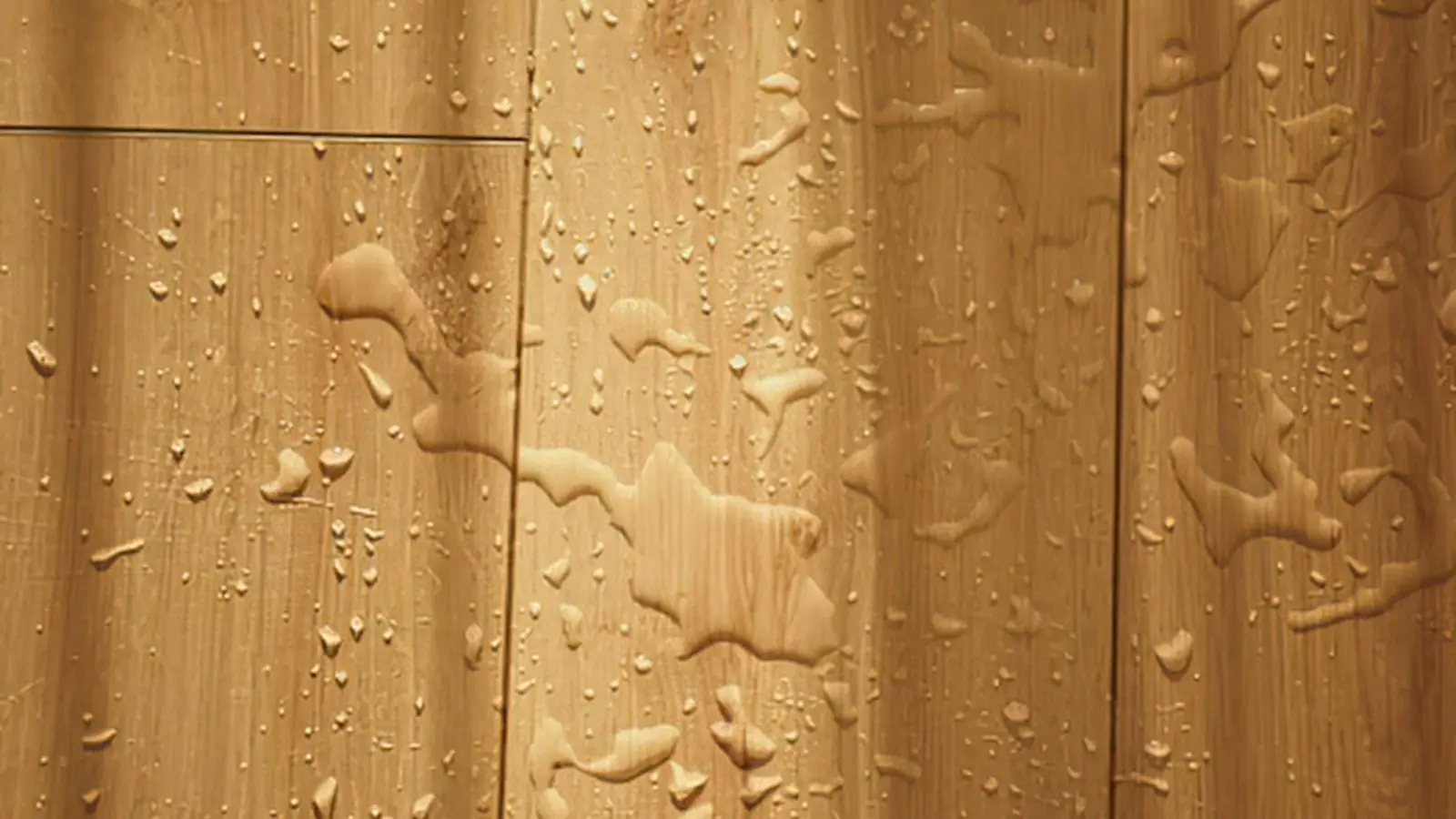
Hardwood can often be saved when the water was clean, the boards were wet for a short time, and drying started quickly. In that case the usual fix is drying in place and a light refinish. Boards that cup hard, buckle or sit over a soaked subfloor usually need partial replacement.
Water that came from outside or from a sewer line changes the answer. Flood water over hardwood is usually contaminated, so the affected boards are normally removed instead of cleaned.
Start with where the water came from
A broken supply line or a leaking dishwasher puts clean water on the floor. Rain driven through a window or a creek that spills into a yard brings in dirt and bacteria, and a backed-up drain adds sewage. ANSI/IICRC S500 sorts water into categories for this reason. Clean water over hardwood can often be dried in place, while contaminated water usually means the wet boards come up.
So the first question to ask is whether outside water was involved. If you are not sure, treat the floor as contaminated until someone checks. Keep kids and pets off it. If water is deep around outlets or appliances, stay out and call the utility or 911 first.
Damage level, repair route and what drives the scope
| Damage level | Likely repair route | What drives the scope |
|---|---|---|
| Surface wet, boards still flat, dried fast | Dry in place, clean, then recoat or lightly refinish | Hours the floor stayed wet, finish type, moisture readings. |
| Mild cupping, edges slightly raised | Controlled drying, a wait for boards to settle, then sand and refinish | Wood species, board width, how soon drying began. |
| Heavy cupping or wide gaps | Pull and replace some boards, then sand the whole room to blend | Number of boards, room layout, stain matching. |
| Buckled or lifted boards | Remove the section, dry or repair the subfloor, reinstall | Subfloor material, fasteners, size of the area. |
| Any contaminated water | Remove affected flooring, clean and treat the subfloor, rebuild | Water category, depth, how far the water spread. |
The real scope comes from moisture readings taken on site, not from a photo.
When a refinish is enough
Refinishing works when the wood has dried flat and the damage sits in the finish or shallow in the surface. After drying, boards are often left to settle before sanding, because sanding a floor that still holds moisture can leave it cupped again later. A moisture meter reading on the boards and on the subfloor tells you when the floor is ready.
Light stains sometimes sand out. Deep dark stains, black rings around nail heads and finish that has turned white are signs the damage goes deeper. Those boards are usually swapped. Water damage repair after the dry-out is where those calls get made board by board.
Board replacement and subfloor repair
Replacing boards sounds simple, but the new wood has to match species, width and thickness, and the repair has to be woven into the existing rows. In many homes the whole room is sanded and refinished so the patch does not show. Stain color is the hard part, because an old floor has aged.
Under the boards, plywood or plank subfloor can swell, split or hold water long after the top looks dry. If it feels soft or the readings stay high, that section is cut out and replaced before new flooring goes down. This is part of the cleanup and rebuild scope. A plumber still has to fix whatever leaked in the first place.
Hardwood still wet? Call before anyone sands it
Moisture readings come first. Our emergency line is open 24/7 at (972) 945-2885.
Signs a hardwood floor needs a closer look
- Board edges rising higher than the middle.
- Gaps opening between boards after the surface dries.
- A musty smell that returns when the room warms up.
- Boards that feel soft or spongy underfoot.
- Dark rings around nail heads.
- A hollow sound near walls or appliances.
- Finish that clouds or turns white in patches.
Lancaster floors, older homes and the floodplain question
Lancaster has a historic Town Square and the 1911 Interurban Building, which tells you older wood floors exist in the area. Older floors are often solid wood that can be sanded more than once, so ask the crew to measure board thickness before anyone says to replace the whole room. Our team serves homes through our page on Lancaster water damage restoration.
Outside water is the other Lancaster question. To find out whether an address is in a FEMA floodplain, the city tells residents to call Public Works Engineering at 972-218-1206. If the water came from outside, that answer matters, because homeowners policies generally do not cover flood damage, so check your policy and ask your insurer early.
Questions to ask before you approve a floor scope
- Did you take moisture readings of the boards and the subfloor, and can I see them?
- Was outside water involved, and does that change what comes out?
- Will the whole room be sanded or only the patched area?
- How will the new boards be matched to the old ones?
- What readings will show the floor is dry enough to refinish?
Ask whether the crew works to ANSI/IICRC S500 and ask to see the drying log. The same questions apply for neighbors with homes in DeSoto, where we also dispatch crews.
If mold shows up under the floor, Texas treats assessors and remediators as separate licenses. Ask any company for its TDLR license number and verify it with TDLR.
Frequently Asked Questions
Often yes when the water was clean and drying started fast. The boards and subfloor need moisture readings before anyone decides. If the floor buckled or the subfloor is soft, some replacement is likely.
It depends on the readings, not the calendar. Boards may need days or several weeks to settle after drying. Sanding too early can leave the floor cupped again.
No. Mild cupping often flattens once the floor dries evenly, and a sand and refinish finishes the job. Heavy cupping, gaps or buckling points toward replacing boards.
Duncanville's city pages name no flood zones, so check the FEMA Flood Map Service Center for your address. If your property sits on the Lancaster side of the line, Lancaster tells residents to call Public Works Engineering at 972-218-1206. Either answer helps when you talk with your insurer.
Not until you know what the water was. Flood water is usually contaminated and can hide electrical hazards. Keep people and pets off it, shut off power only if the area is dry and safe, and call the utility or 911 first if you see sparks or smell gas.