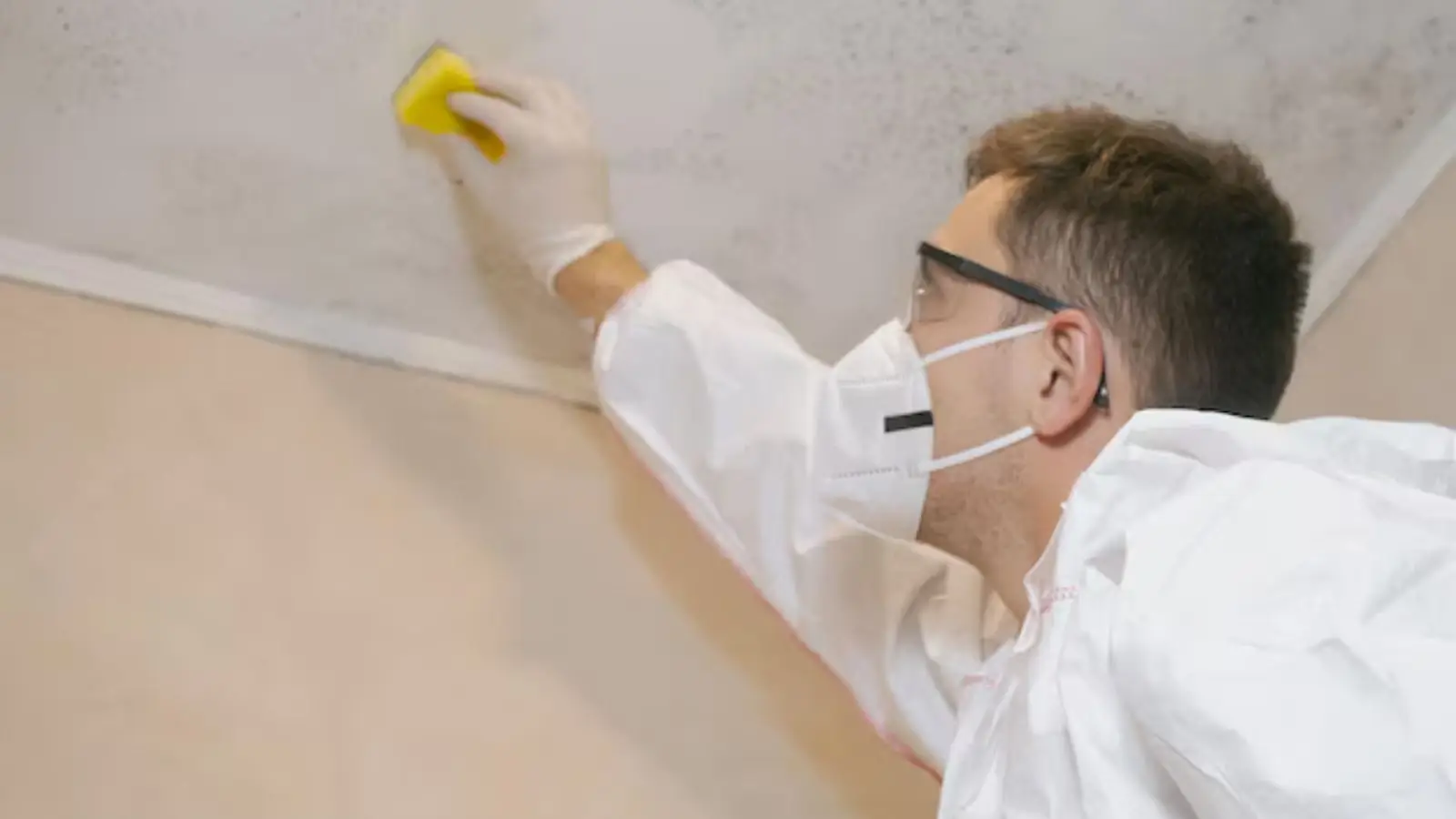
The short answer: find and fix the moisture first, then clean or cut out the affected material, then dry it fully before any paint goes on. A small patch on a painted, solid ceiling can often be cleaned by a careful homeowner. Growth that comes back, spreads, or sits on soft or stained drywall needs the drywall removed. Scrubbing a ceiling that is still wet only moves the problem around.
Stop the water before you touch the mold
Mold needs moisture, so the leak or the humidity source is the real target. Look above the stain. A roof leak, a bathroom above, a sweating duct, a failed supply line or a clogged condensate drain can all feed one spot on a ceiling.
If water is actively dripping, shut off the main water valve if the source is plumbing, and put a bucket under it. If the ceiling is sagging or the stain is wet to the touch, stay out from under it and keep the power off to any light fixture in that area unless you know it is safe and dry.
A plumber or roofer fixes the source. We do not replace either trade. What we do is dry and rebuild what the water touched, and a repair sticks only when the source is already handled.
Set up containment, even for a small job
Disturbing mold throws spores into the air and onto every surface below. Before you clean, close the room door, turn off the HVAC so the system does not pull dust through the house, and lay plastic sheeting on the floor and nearby furniture. Tape it down.
Professionals build containment barriers and run negative air with HEPA air scrubbers, which keeps the work zone under slight suction so air flows in rather than out. You can copy the idea at home with plastic, tape and a box fan blowing out of a window.
Stop the source
Fix the leak or humidity cause and confirm the area is no longer getting wet.
Contain the room
Seal doors and vents, cover the floor and keep the HVAC off while you work.
Clean or remove
Clean a small solid patch, or cut out drywall that is soft, stained or heavily covered.
Dry and repair
Dry the area to a normal reading, then patch, prime and repaint.
What a homeowner can do on a small patch
If the growth is a few inches across, sits on paint over firm drywall, and the ceiling is dry, you can clean it. Wear an N95 respirator, goggles and gloves. Wipe with a damp cloth and a household detergent solution, working from the edges inward, and bag the cloths right away.
Never mix cleaning products, especially anything with bleach and anything with ammonia, because the fumes can be dangerous. Dry the spot with a fan. If the stain or growth returns within a few weeks, the moisture is still there or the growth is below the paint.
Before you start scrubbing, confirm each of these
- The leak or humidity source is found and stopped.
- The ceiling is dry to the touch and firm, not soft or bowed.
- The patch is small, with no more than a few inches of growth.
- The room is closed off and the HVAC is off.
- You have an N95 respirator, goggles and gloves.
- You have heavy bags ready for cloths and debris.
- A fan is set up to dry the spot afterward.
Health questions about mold exposure belong to a physician. We do not diagnose anything, and we do not give health advice.
When the drywall has to come out
Ceiling mold bigger than a small patch?
Call (972) 945-2885 and we will arrange a look at the ceiling and the moisture behind it.
Porous materials hold growth below the surface. If the drywall is soft, crumbling, bowed, stained in rings, or the growth covers more than a small patch, cleaning the face is not enough. The affected section is cut out, usually a bit past the visible edge, and bagged inside containment.
Wet insulation above it comes out too. A moisture meter and a thermal imaging camera show how far the dampness runs, which is often farther than the stain. That reading sets the size of the cut.
Texas treats larger jobs differently. Under Texas Occupations Code Chapter 1958, remediation affecting less than 25 contiguous square feet is exempt from licensing, and larger projects involve a licensed mold assessor and a separate licensed remediator. Ask any company for its TDLR license number and verify it with TDLR. If you need water damage repair after the mold work, that is a separate rebuild step.
Drying and repainting the right way
Drying is where many repairs fail. After the removal, air movers and an LGR dehumidifier run until a moisture meter shows the framing and remaining drywall back to a normal reading. That usually takes several days and is tracked in a drying log.
Only then do you patch, prime with a stain-blocking primer and repaint. Painting over damp material traps moisture and gives growth a place to restart. Industry practice follows ANSI/IICRC S520 for mold remediation, and you can ask any company whether its crews work to it.
| Ceiling condition | Likely path | Who handles it |
|---|---|---|
| Small spot on dry, firm paint | Careful cleaning, then dry and repaint | Homeowner. |
| Spreading or returning growth | Find hidden moisture, open the ceiling | Remediation crew. |
| Soft, bowed or ring-stained drywall | Cut out and replace the section | Remediation and repair crew. |
| Active drip or recent storm leak | Stop the source, then dry the area | Roofer or plumber first. |
Cost depends on the water source, the affected area, the materials and the drying days, and the real number comes from an on-site look.
Watching ceilings in Duncanville after wet seasons
Duncanville ceilings after spring and fall rain
The National Weather Service puts Dallas/Fort Worth normal annual precipitation, 1991 to 2020, at 37.01 inches, and rain is typically heaviest in spring and fall. Roof leaks show up after those seasons, so a ceiling check in late spring and again in late fall catches a small stain before it becomes a growth problem.
Gulf moisture also keeps summer humidity high. That means a bathroom, a closet or a room with a sweating duct can stay damp for weeks. Walk your ceilings after each wet season, look for new rings or dark spots, and press gently near any stain to see if it feels soft.
We serve neighbors in DeSoto and Lancaster as well, so a ceiling job on either side of Duncanville is a normal call for us.
Frequently Asked Questions
Bleach is a surface product and does little for growth inside drywall. Many remediators prefer detergent cleaning and removal of damaged material. Never mix bleach with ammonia or other cleaners.
Not if the cause is still active. Paint will hide the stain while the moisture keeps feeding the growth underneath. Fix the source, clean or remove the material, dry it, and then prime and paint.
It depends on how wet the framing and insulation got. Drying often takes several days with air movers and a dehumidifier, and a moisture meter confirms when it is done.
Call the 24/7 line at (972) 945-2885 and tell us where it keeps coming back. Because Dallas/Fort Worth gets heavy spring and fall rain, we usually start by checking the roof side and any room above for a leak that shows up after storms.
Coverage often depends on whether the water damage was sudden and accidental. Gradual leaks and neglect are often not covered. Check your policy, and ask your insurer or the Texas Department of Insurance help line at 1-800-252-3439.