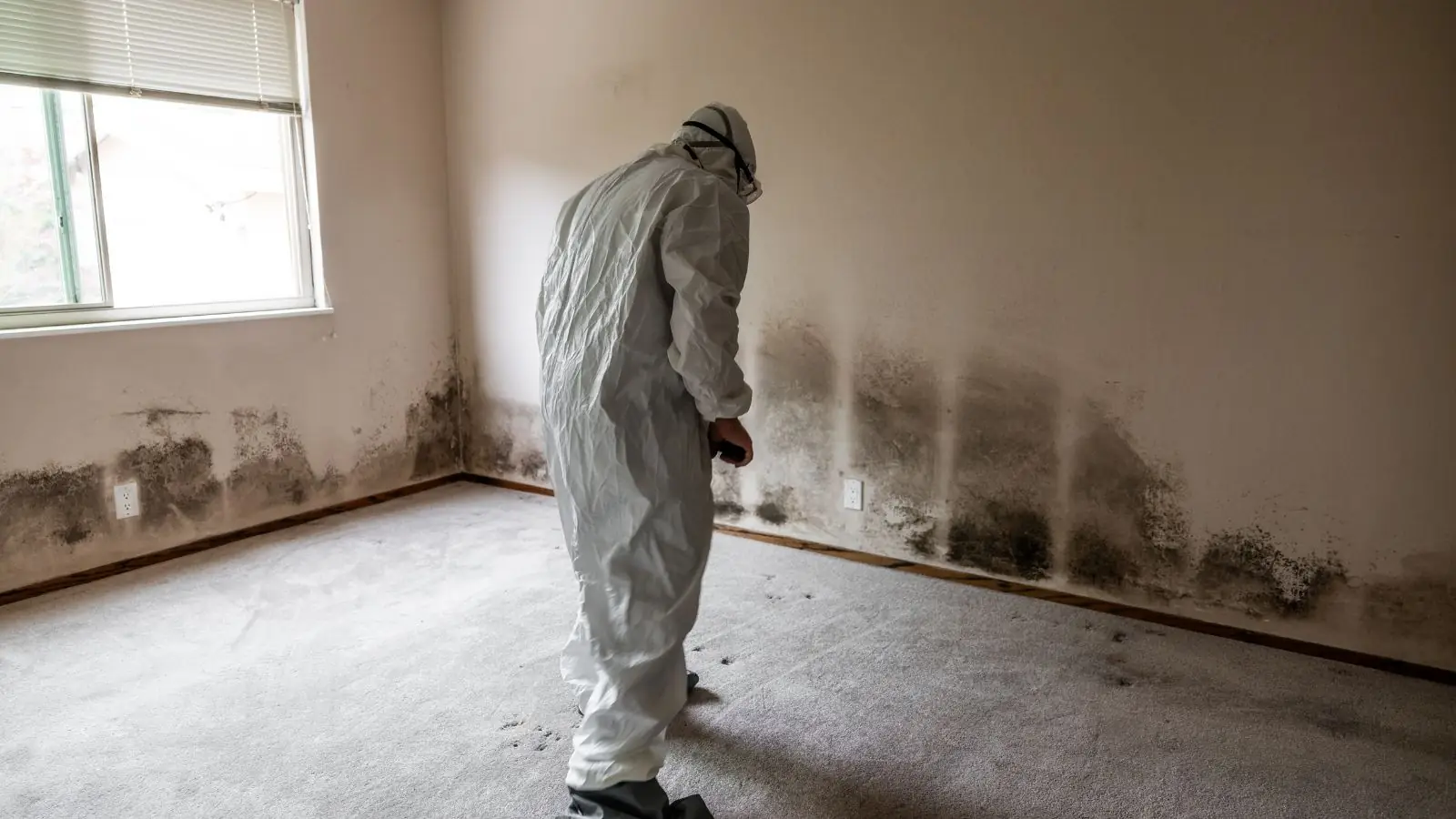
To get rid of mold in a basement, crawl space or walkout lower level, you stop the moisture source, contain the area, remove porous materials that cannot be cleaned, clean and dry the rest, and then confirm the space stays dry. Cleaning a surface without fixing the water does not hold. Small spots on hard surfaces can be a homeowner job, and larger or hidden growth belongs with professionals.
Fix the moisture before anything else
Mold needs moisture to grow, so every plan begins with where the water comes from. Common sources in a lower level are seepage after heavy rain, a leaking pipe, plumbing condensation, a failed sump pump and high indoor humidity in summer.
Restoration crews dry the space, but we do not waterproof foundations or repair plumbing. If water keeps coming in, a drainage specialist, plumber or foundation contractor needs to fix that first.
A simple check helps. Tape a square of plastic sheeting to a concrete wall for two days. Moisture under the plastic means water is coming through, and moisture on top means indoor humidity.
Containment keeps the problem from spreading
Disturbing mold can send spores into the rest of the house. Professionals seal the work area with plastic barriers, run HEPA air scrubbers and use negative air so air flows into the work zone instead of out of it.
If you tackle a tiny spot yourself, close doors, turn off the air handler for that area and avoid dry sweeping or fans that blow across the growth.
Basics for a very small spot
- Wear an N95 respirator, gloves and eye protection.
- Wet the area lightly so dust does not fly.
- Bag removed material and seal the bag before carrying it out.
- Wipe hard surfaces with detergent and water, then dry them.
- Stop and call a pro if growth is larger than you thought.
Clean it or remove it: how materials are handled
| Material | Clean or remove | Why |
|---|---|---|
| Drywall and paneling | Remove | Porous, and growth often spreads into the paper and the back side. |
| Carpet and pad | Remove | Absorbs moisture, and cleaning cannot reach everything underneath. |
| Insulation | Remove | Holds water and cannot be cleaned effectively. |
| Unfinished wood framing | Clean | Structural and can be HEPA vacuumed, sanded or treated, then dried. |
| Concrete floors and walls | Clean | Hard and non-porous at the surface, so it can be scrubbed and dried. |
| Metal, glass and sealed tile | Clean | Non-porous, so growth sits on the surface only. |
| Cardboard boxes and paper | Remove | Absorbs moisture and is easiest to replace. |
Anything that stayed wet for days and cannot be dried usually goes.
Mold in the lower level?
Call (972) 945-2885 to talk through what you are seeing.
Removal, cleaning and drying in order
Stop the water
Repair the leak or drainage problem that fed the growth.
Contain
Seal off the area and run HEPA air scrubbers with negative air.
Remove and clean
Cut out porous materials, clean framing and concrete, and bag waste.
Dry and verify
Run dehumidifiers and air movers until moisture readings are normal.
Drying matters as much as cleaning. LGR dehumidifiers pull moisture from the air while air movers push it across surfaces, and moisture meters tell you when wood and concrete are dry. Our water mitigation work covers that drying stage. Wood framing may need a few days to reach normal readings, and concrete can take longer. Professional practice follows ANSI/IICRC S520, and you can ask any company whether its crews work to it.
When a professional is the safer choice
Signs that a job has outgrown a mop bucket are easy to spot. Growth that returns within weeks usually means moisture is still present, and growth behind paneling or under flooring cannot be seen at all. Musty smells with no visible source also point to hidden damp materials.
Call a professional when the growth covers a large area, returns after cleaning, sits in the walls, follows a sewage or flood event, or when you cannot find the water source. Health questions about mold belong to a physician, and we do not diagnose them.
Texas rules for mold work in Duncanville
Texas exempts remediation that affects less than 25 contiguous square feet from licensing. That means you may clean a small patch yourself, but bigger work has to go to a licensed remediator, so measure the affected area honestly before you decide who does the job.
Before mold work begins, the client must receive the TDLR Consumer Mold Information Sheet. After remediation, a licensed remediator gives the owner a Certificate of Mold Damage Remediation. Sellers must give buyers certificates issued in the previous five years, so keep your certificate in your home file because it matters when you sell.
Records and photographs are kept by remediators for at least three years, so you can ask for copies later. A buyer who sees a certificate also sees that a licensed assessor stated the contamination was remediated.
After the cleanup: keeping the lower level dry
Keep indoor humidity steady, run a dehumidifier in summer, and check window wells and downspouts. Store items off the floor, and recheck the area after hard rain. North Texas summers are humid, so a lower level can sweat even when no water leaked in. Restoration is not waterproofing, so watch for new damp spots. A cheap hygrometer from a hardware store shows your humidity at a glance, and readings that stay high are a signal to look for moisture again.
Serving nearby towns
The same approach applies for neighbors. If you live in Lancaster or Grand Prairie, we dispatch there as well when a lower level needs drying or mold work.
Frequently Asked Questions
Paint does not remove growth or fix moisture. Mold can keep growing under it. Remove or clean the affected material and dry the space first.
A dehumidifier lowers humidity, which helps stop new growth, but it does not remove existing growth. Affected porous materials still need to be removed or cleaned.
Texas exempts remediation affecting less than 25 contiguous square feet from licensing. Even then, find the moisture source and protect yourself. Larger areas need a licensed remediator, so measure the patch before you start.
Yes, for work that requires a licensed remediator. You should receive the Consumer Mold Information Sheet before work and a Certificate of Mold Damage Remediation afterward. Keep it, since a seller must pass certificates from the past five years to a buyer.
Drywall is porous, and growth can run into the paper and the back. Surface wiping does not reach it. Removal is often the more reliable choice, and new drywall costs less effort than repeated cleaning.