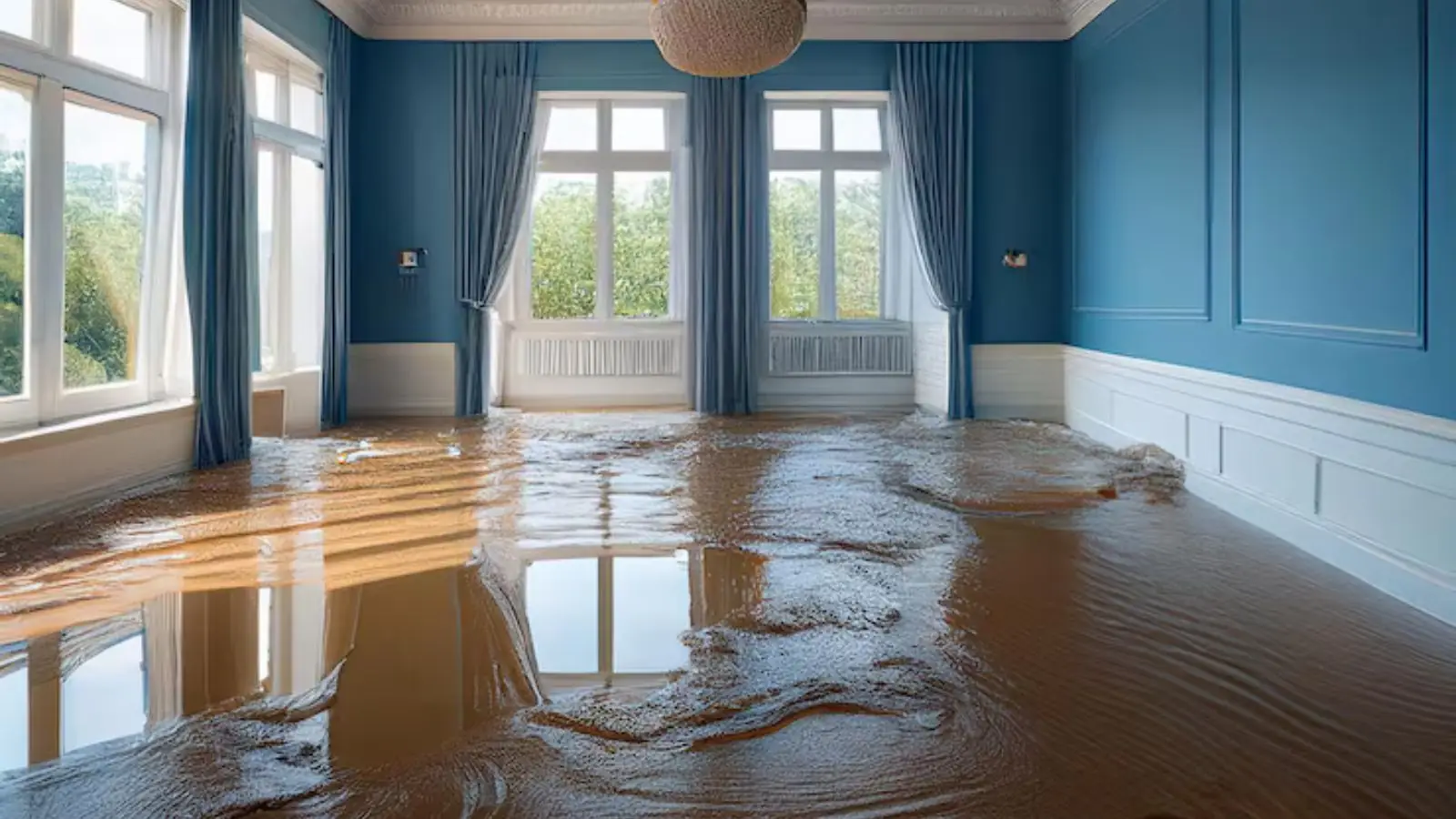
To fix water damaged hardwood, stop the water, remove standing water and rugs, get air moving, and run a dehumidifier. Do not sand or refinish until the wood is dry. Boards often flatten on their own as moisture leaves, and sanding too early can cause permanent damage. If boards are black, rotted or still wet after days, they usually need to be replaced.
The first 48 hours
Stop the water
Shut off the source and remove standing water with a wet vacuum.
Clear the floor
Lift rugs, furniture and wet items so air can reach the boards.
Move the air
Run fans and open windows if outdoor air is drier than indoor air.
Dehumidify
Run an LGR or household dehumidifier and watch the moisture readings.
Speed matters because wood absorbs water and swells. The longer it stays wet, the more it distorts and the more likely mold and finish damage become.
If the water came from sewage, a backed-up drain or outside flooding, keep people and pets away and call for help. Keep power off in wet areas unless you know it is safe and dry.
Take photos of the floor and note the time you found the water. Write down which rooms were wet. Those details help your insurer and help a crew judge how long the wood has been wet. Do not use fans to push dirty water around, and do not wait for the floor to dry on its own if the subfloor is soaked.
Reading cupping and crowning
Cupping means board edges rise higher than the center, usually because the bottom is wetter than the top. Crowning is the opposite, with the center higher than the edges, which can happen when the surface dries too fast or after sanding a cupped floor.
Both are signs of moisture imbalance. Do not sand to fix them until the wood is fully dry, or you will cut a crown into the floor.
| Symptom | What it means | Next step |
|---|---|---|
| Edges lifted, center low | Cupping from moisture below | Dry the floor and subfloor, then re-check. |
| Center higher than edges | Crowning from over-drying or sanding | Let it settle, then evaluate. |
| Gaps between boards | Boards shrank after drying | Wait, then fill or refinish. |
| Black stains or musty smell | Mold or long-term moisture | Call a crew, boards may need replacing. |
| Boards lifting off the subfloor | Heavy saturation or glue failure | Professional drying or replacement. |
A moisture meter tells you more than the surface does, since boards can feel dry while the subfloor is wet.
Hardwood floors wet or lifting?
Call (972) 945-2885 for the 24/7 emergency line. Same-day response is available when crews are free.
Why the subfloor decides the outcome
The boards you see are only the top layer. Water runs under them and soaks the subfloor, and a floor can look fine while the layer beneath stays wet. That trapped water keeps pushing the boards upward and can feed mold.
A pin or pinless moisture meter reads both layers. Compare the reading on the boards to a dry area of the same wood, since a normal number varies by species and home. Drying mats and air movers pull water out from below when needed.
When boards can be saved
Floors dried within a couple of days from a clean water source have the best odds. Boards that are only slightly cupped often flatten after drying. A pro uses moisture meters, drying mats and air movers to pull water out of the boards and subfloor.
Wet cavities under the floor matter. If the subfloor is wet, water mitigation with drying equipment is the safer route than hoping it dries on its own.
Boards that are blackened, split, soft or still wet after several days usually come out. Sections can sometimes be replaced and blended in. Cost depends on the water category, area, materials, drying days and rebuild scope, and the real number comes from an on-site look.
What not to do while the floor is wet
- Do not run a heater at full blast on the boards, since fast drying can split them.
- Do not cover the floor with plastic or rugs, which traps moisture.
- Do not walk on soaked boards in heavy shoes.
- Do not use a steam cleaner or wet mop.
- Do not refinish or seal until the readings are normal.
When sanding is safe
Sand only after moisture readings return to a normal level and the floor has been flat for a while. Sanding wet wood can lock in cupping and shrink gaps later. A flooring pro can tell you if the boards are thick enough to sand.
Industry practice follows ANSI/IICRC S500, and you can ask any company whether its crews work to it. We do not replace flooring installers, and we do not guarantee that a floor can be saved.
Duncanville floors after a freeze
The National Weather Service says Dallas/Fort Worth averages 29 freezes per season, so a thaw can reveal a burst pipe under or above a floor. A small hidden leak can soak a subfloor for days before boards cup.
After a freeze, check floors near exterior walls, kitchens and bathrooms. Look for cupping, damp baseboards or a musty smell, and watch your water meter. The City of DeSoto handled about 400 burst pipe and shutoff calls during the 2021 winter storm, which shows how many homes can have a leak at once after a hard freeze.
We serve neighbors in DeSoto and Cedar Hill, and the first step after a freeze is always to find where the water is coming from.
Frequently Asked Questions
Often, yes, if the water is clean and drying starts within about 48 hours. Floors that stay wet for days, or boards that are blackened or rotted, usually need replacement.
Mild cupping often improves as the wood dries. Give it time and keep humidity controlled. Do not sand until a moisture meter shows the boards are dry.
Sometimes a few boards are removed to let the subfloor dry. Do not pull up a whole floor without advice, since it can be hard to put back.
Shut off the main water valve and call (972) 945-2885 for the 24/7 line. Because Dallas/Fort Worth averages 29 freezes per season, check floors after any hard freeze, not only when you see water.
Sudden and accidental damage like a burst pipe is often covered, and gradual leaks and neglect often are not. Flood is usually excluded. Check your policy and ask your insurer.