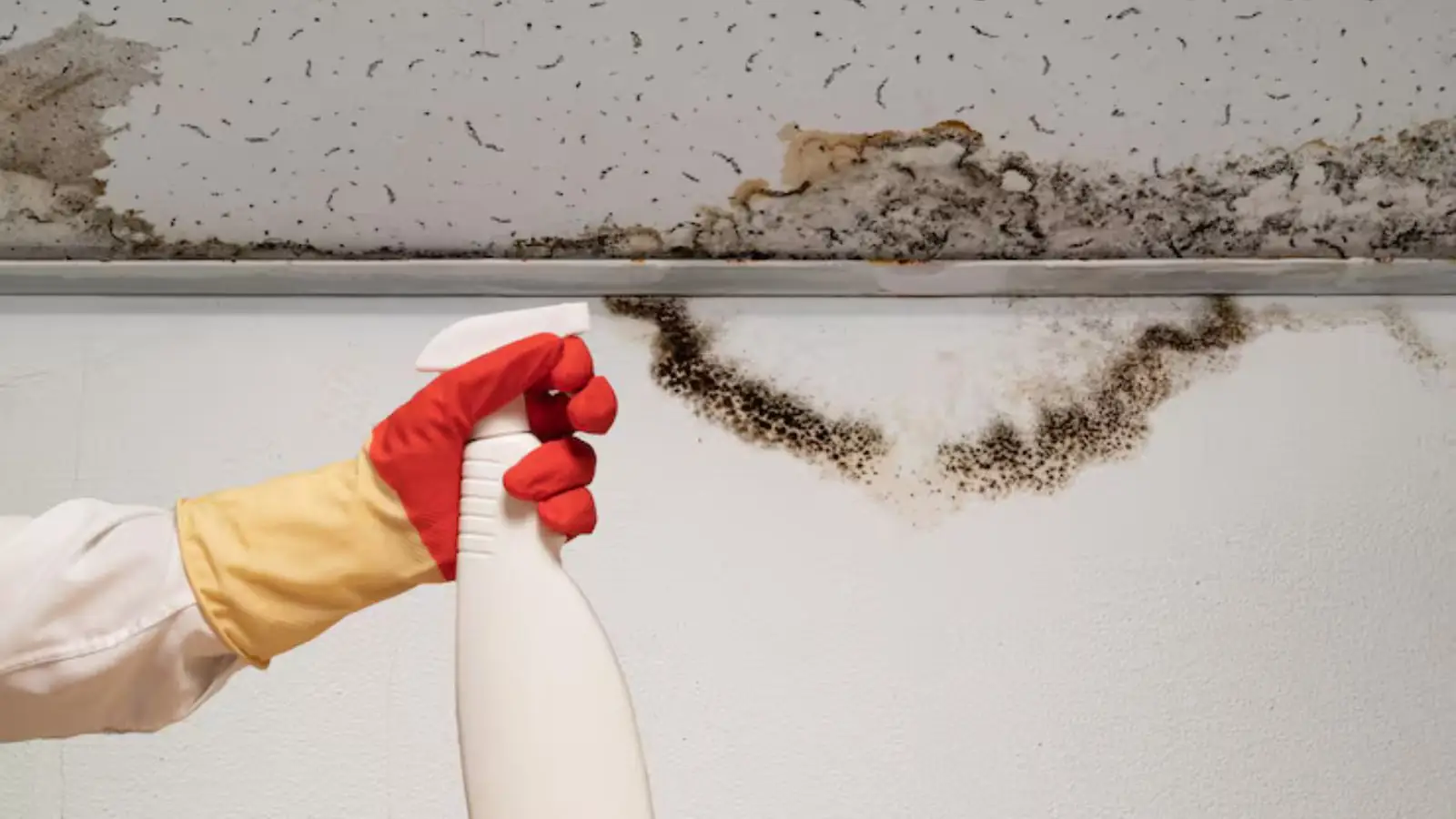
Black spots on a ceiling are usually mold growing on a surface that stays damp, or old dirt and staining that looks like mold. You cannot tell which by sight alone, and the stain is the symptom, not the cause. The first job is to find and stop the moisture, because cleaning growth without fixing the water source only invites it back.
What dark ceiling growth usually is
Ceiling stains come in several forms. Brown rings often mean a roof or plumbing leak that dried and wet again. Black or gray spots in clusters often mean mold growing on paper-faced drywall that stays damp. Sooty streaks near vents can be dust attracted to cold or wet surfaces.
Only testing by a licensed assessor can say what a stain is. A visual guess is not a diagnosis, and health questions belong to a physician.
Why ceilings are a common place for it
Ceilings sit under the roof, the attic, the air handler and often a bathroom. Any of those can feed moisture into the drywall for weeks before a stain shows. Drywall and insulation hold water well, so a small leak can keep a patch damp for a long time.
- Roof leaks from damaged shingles, flashing or a clogged valley.
- AC condensate lines that clog or overflow into the ceiling.
- Plumbing above, such as a supply line, drain or a bathroom upstairs.
- Bath exhaust fans that dump humid air into the attic instead of outside.
- Warm humid air meeting cold duct surfaces and forming condensation.
Texas summers keep humidity high, so condensation on cold ducts is a real cause in North Texas. Spring storms bring the roof leaks. Both can leave a ceiling damp for days before you see a mark.
Reading the stain: look, source and first step
| Ceiling stain look | Likely moisture source | First step |
|---|---|---|
| Brown ring with a darker edge, spreading after rain | Roof leak or flashing failure | Cover or stop the leak and call a roofer. Then have the ceiling dried and checked. |
| Dark spots near an AC vent or the air handler | Condensate line or duct condensation | Have an HVAC technician check the drain line and duct insulation. |
| Stain that appears below a bathroom | Plumbing leak or shower pan above | Shut off the water to the fixture and call a plumber. |
| Black spots in the ceiling corners of a bathroom | Exhaust fan not venting outside, or steam with poor airflow | Fix the exhaust path and dry the area. |
| Large soft sagging area | Active, ongoing water | Stay out from under it, shut off water if you can, and call for emergency help. |
Fixing the source comes before any cleanup.
If your stain matches more than one row, trust the one with the most evidence, like timing with rain or with the air conditioner running. A roofer, plumber or HVAC technician can confirm. Restoration comes in after the source is found, to dry what got wet and rebuild what cannot be saved.
Ceiling stain growing?
Call (972) 945-2885 and describe what you see.
Find the moisture first, then deal with the growth
Mold needs moisture to grow, so no cleanup lasts without dryness. A moisture meter and a thermal imaging camera can map which parts of a ceiling are still wet. Often the wet area is larger than the stain.
If a leak is active, the right trade fixes it first. We do not replace a roofer, plumber or HVAC technician, and a crew should not remediate until the source is stopped.
What remediation looks like on a ceiling
Contain
Plastic barriers and negative air keep spores from spreading to other rooms.
Remove
Affected drywall and insulation are cut out and bagged, not wiped.
Clean
Framing is HEPA vacuumed and treated, and HEPA air scrubbers run.
Dry and rebuild
The area is dried and verified, then new drywall and paint go in.
This follows ANSI/IICRC S520, the published standard for mold remediation, and you can ask any company whether its crews work to it. After the mold step, water damage repair restores the ceiling itself. Do not just paint over a stain, because paint does not remove growth or fix moisture.
Texas mold rules that apply in Duncanville
Texas Occupations Code Chapter 1958, run by the Texas Department of Licensing and Regulation (TDLR), sets how mold work is licensed. A licensed mold assessor and a licensed mold remediator must be different license holders on one project, so the company writing the plan cannot be the company doing the work. That separation protects you, and it means you should expect two parties on a larger job.
Ask any company for its TDLR license number and verify it with TDLR before you sign. We do not claim our crews hold any license under that chapter, so use the same check on whoever you hire for mold work.
While you wait for help
- Take photos of the stain with a coin beside it for scale.
- Mark the edge of the stain with a pencil and date it.
- Keep the room dry and the air handler fan off for that area if you can.
- Do not poke a sagging ceiling, since trapped water can fall.
- Keep people and pets out from under a bulging spot.
- Note whether the stain grows after rain, showers or air conditioner use.
Nearby towns and similar ceilings
Ceiling mold looks the same across the Best Southwest area. If you live in Cedar Hill or DeSoto, the same steps apply: find the moisture, dry it and remove what cannot be saved.
Frequently Asked Questions
No. Dust, soot and old water stains can look similar. A licensed assessor can tell you what the growth is. Either way, a dark patch on a ceiling points to moisture that should be checked.
Wiping rarely solves it because growth often sits inside the drywall paper and the moisture is still there. Porous materials like drywall and insulation are usually removed instead of cleaned. Fixing the leak comes first.
Call whoever can stop the water first. A roofer for a roof leak, a plumber for a pipe, an HVAC technician for a condensate line. Then bring in restoration for drying and mold remediation.
Ask for the company's TDLR license number and check it with TDLR. Texas requires a mold assessor and a mold remediator to be different license holders on one project. Also ask which standard the crew follows, such as ANSI/IICRC S520.
Not always. A small stain can sit above a large wet area of insulation or drywall. A thermal imaging camera and moisture meter show the true size before anyone cuts anything.