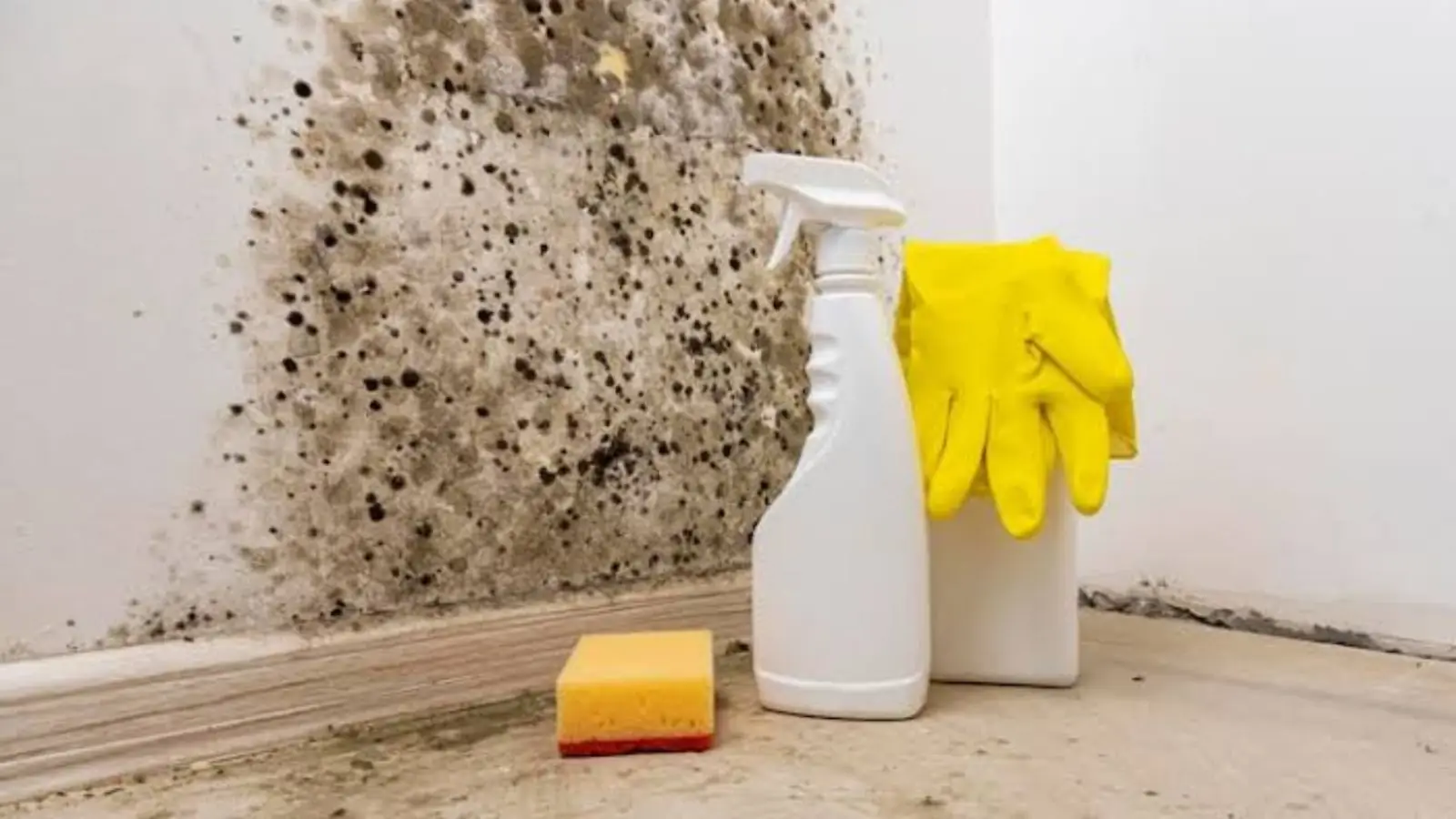
Bathroom ceilings grow dark spots because they get warm, wet air every day and often have little way to shed it. A weak exhaust fan, a duct that does not vent outside, or a shower leak from the floor above all feed the same result. Growth on paint can be cleaned. Growth in soft drywall means the moisture is inside, and the section needs to come out.
Why bathroom ceilings grow it
A hot shower puts a lot of moisture in the air, and warm air rises to the ceiling, where it meets a cooler surface and condenses. If the fan does not clear the room, that film of water stays on the paint for hours.
Dirty fan grilles, undersized fans and long duct runs reduce airflow. A fan that rattles and moves little air is not doing its job, even if it spins.
Surface growth versus growth in the drywall
Surface growth sits on top of the paint and wipes off with a damp cloth. It usually follows the pattern of condensation, near the fan or in corners. Growth in the drywall shows up as stains that bleed through fresh paint, a soft or bubbled ceiling, or a ring pattern from a leak.
Press the ceiling gently with a gloved hand. If it feels firm and dry, cleaning is realistic. If it is soft, flaking or damp, call a crew.
| Bathroom ceiling sign | Likely cause | Next step |
|---|---|---|
| Scattered dark spots near the fan | Steam not leaving the room | Clean, fix ventilation. |
| Dark corners and along the wall edge | Cold surface condensation | Clean, improve airflow and insulation check. |
| Ring stain with a brown edge | Leak from above, shower pan or supply line | Plumber, then restoration. |
| Bubbled or soft paint | Moisture inside the drywall | Open the ceiling and dry. |
| Stain returns after repainting | Hidden moisture source | Moisture mapping and removal. |
A stain alone does not identify the source, so moisture readings and a look above the ceiling matter.
Ventilation fixes that make the biggest difference
What to do first: bathroom ventilation fixes
- Run the fan during the shower and for at least 20 minutes after.
- Clean the fan grille and blades twice a year.
- Check that the duct actually vents outside, not into the attic.
- Replace a noisy, weak fan with a properly sized unit.
- Reseal tub and shower caulk lines where they crack.
- Leave the door open afterward so humid air can leave.
- Wipe condensation from the ceiling and walls after a shower.
Fan size matters too. Check the fan label for its airflow rating if you can read it. A common guideline is to match fan airflow to the room size, and a small, tired fan in a bigger bathroom will never keep up. A heating and cooling technician or an electrician can size and install a replacement and run the duct to the outdoors, which is outside our trade.
Dark ceiling spots that keep returning?
Call (972) 945-2885 and we will check how far the moisture goes.
A shower leak from the floor above
If the bathroom is on a lower floor, a failed shower pan, tub drain or supply line above can drip into the ceiling. A stain with a ring, a spot that grows after showers and drywall that feels soft all point this way.
A plumber finds and repairs the leak. We do not replace plumbers, but we dry and rebuild what the water touched, which is where water damage repair fits.
What removal looks like when drywall is involved
When the ceiling is soft or stained through, the crew closes off the bathroom with containment barriers and sets up negative air with a HEPA air scrubber. The affected drywall is cut out past the visible edge, bagged and removed.
Moisture meters and a thermal imaging camera check the framing and any insulation above. Air movers and a dehumidifier dry the cavity, and then new drywall, primer and paint go on. The fan or leak must be fixed too, or the same spots return.
Clean-up scope and what Texas requires
A small patch on solid paint can be cleaned with a household detergent, a damp cloth, an N95 respirator, goggles and gloves. Never mix cleaning products, since some combinations release dangerous fumes. Health questions about mold belong to a physician.
Under Texas Occupations Code Chapter 1958, remediation affecting less than 25 contiguous square feet is exempt from licensing. For larger work, ask any company for its TDLR license number and verify it with TDLR. Remediation follows ANSI/IICRC S520 practice.
Larger scopes mean containment barriers, HEPA air scrubbers and removal of affected drywall. Cost depends on the area, the materials, the moisture source and the drying days, and the real number comes from an on-site look.
Older Duncanville homes and their bathroom fans
Duncanville grew from 3,774 residents in 1960 to 27,781 in 1980, according to the Texas Almanac via the TSHA Handbook of Texas. As a result, many homes are now 45 to 65 years old, and may still have original or very old bathroom exhaust fans, ducts and caulk lines.
So check yours. Run the fan with a tissue held to the grille to see if it pulls, look at the duct in the attic if you can reach it safely, and inspect caulk around the tub for cracks. These checks take minutes and catch the cause before dark spots form.
If your ceiling needs work, we serve Grand Prairie and DeSoto too, and the process is the same.
Frequently Asked Questions
We do not diagnose health issues. Health questions about mold exposure belong to a physician. What we can say is that visible growth means moisture is present and should be addressed.
A small patch on dry, firm painted drywall can be cleaned with detergent and a damp cloth, with a respirator, goggles and gloves. If the ceiling is soft or the growth returns, call a crew.
At least 20 minutes after a shower is a common rule of thumb. A fan that is too weak may need to run longer or be replaced.
Call (972) 945-2885 and mention the age of the home. Since many Duncanville homes are 45 to 65 years old, we start by checking the fan, duct and caulk lines along with the ceiling moisture.
Sudden and accidental leaks are often covered, and gradual leaks and neglect often are not. Check your policy and ask your insurer or the Texas Department of Insurance at 1-800-252-3439.