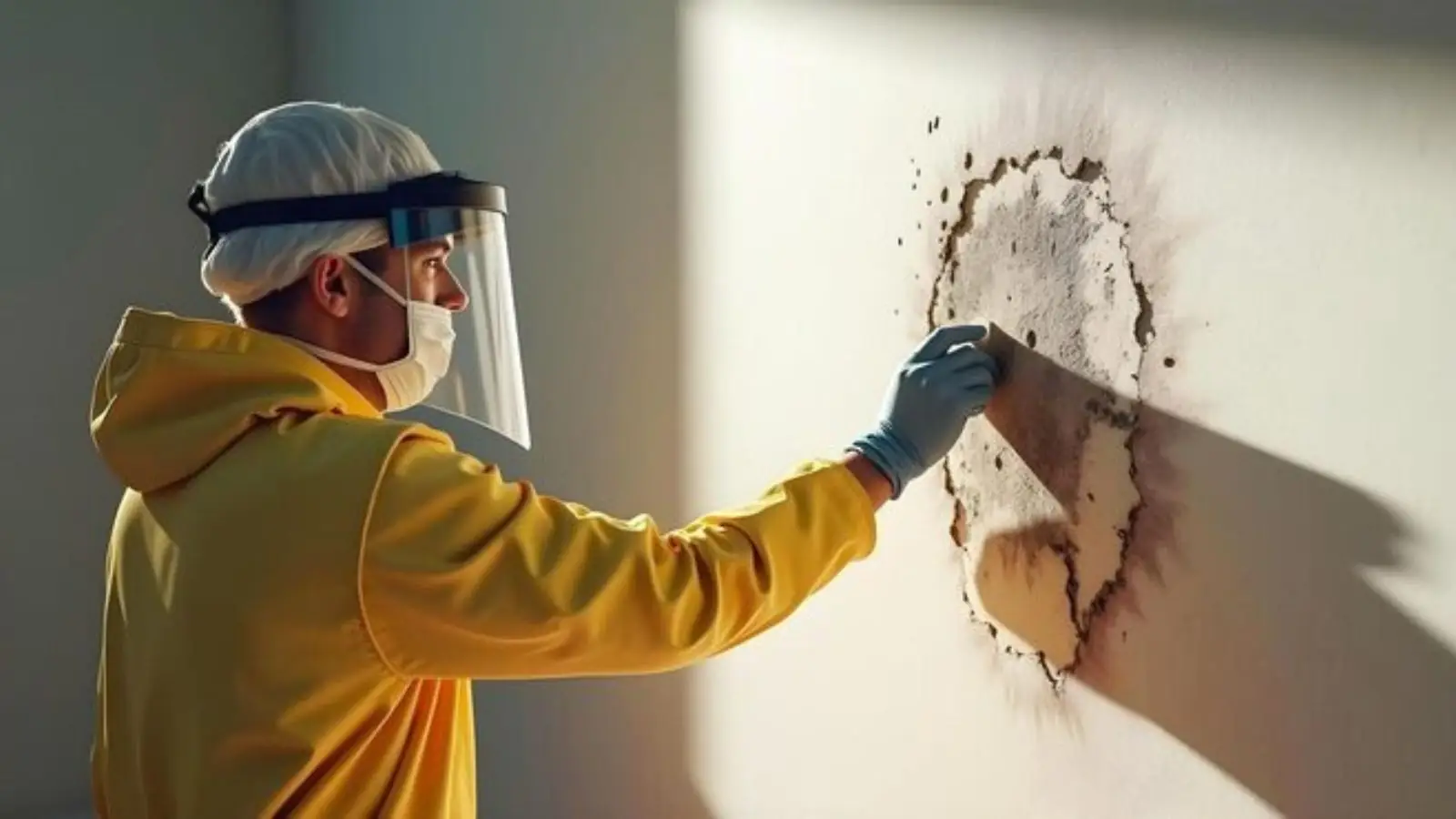
Bathroom mold on tile, grout and caulk can usually be cleaned by a homeowner. Mold in drywall, wood framing or the subfloor cannot be scrubbed out, so those materials are cut out and replaced. Either way, the mold only came back because something stayed wet, so the real fix is stopping the moisture.
Caulk that stays black after cleaning is usually removed and replaced. A spot that keeps returning on a ceiling or wall can point to a leak or poor ventilation.
What a homeowner can clean and what they should leave
Hard, nonporous surfaces like glazed tile, a fiberglass tub and a glass door can be wiped with detergent and water. Scrub, rinse and dry the surface completely. Run the exhaust fan, open a window and wear gloves and eye protection.
Porous materials are different. Drywall, ceiling texture, grout that has gone soft, wood trim and the paper side of insulation soak up water and hold mold below the surface. Painting over them hides the stain but does not fix the problem.
Small jobs go better with a plan. Clean the top of the room first and work down, so drips do not land on finished areas. Bag rags and sponges before you carry them out, and dry the whole area afterward with a fan or a dehumidifier. A bathroom that looks clean but stays damp will grow mold again.
| Bathroom surface | Clean or replace | Why |
|---|---|---|
| Glazed tile | Clean | Hard and nonporous, so growth stays on top. |
| Sealed grout lines | Clean, reseal when dry | Stays on the surface if it was sealed and dry. |
| Crumbling or stained grout | Regrout | Porous, and it holds moisture. |
| Silicone caulk | Replace | Black stains root into the material. |
| Painted drywall ceiling | Clean light spots, cut out if soft | Soft drywall means moisture has soaked in. |
| Drywall behind tile or a tub | Replace | A hidden leak is likely, and drywall cannot be dried clean. |
| Wood subfloor | Dry and test, replace if soft | Rot and long wetting weaken it. |
| Fiberglass tub surround | Clean | Nonporous, but check the seams behind it. |
| Exhaust fan and duct | Clean the cover, check airflow | A weak fan leaves steam in the room. |
Texas exempts remediation under 25 contiguous square feet from licensing, but larger jobs have rules.
Finding a leak behind the wall
Mold that comes back in the same corner is a clue. Water can leak from a supply line, a shower valve, a tub drain or a toilet flange and travel behind tile, down the wall and into the subfloor. Look for a loose tile, a soft spot near the tub, a stain on the ceiling below, or a vanity cabinet with a swollen base.
Thermal imaging cameras and moisture meters can find wet material without tearing out the whole bathroom. A plumber then repairs the pipe. Restoration is the drying and rebuild that follows, not a substitute for the plumber.
Mold in the drywall or under the tub?
Call (972) 945-2885 any time. We are open 24/7 for water emergencies.
When materials get cut out
If drywall is soft, stained through or still wet two days after the leak stopped, a section is usually cut out. Crews set up containment barriers, run HEPA air scrubbers and sometimes use negative air so dust stays in the work area. Remediation follows ANSI/IICRC S520 practice. You can ask any company whether its crews work to it.
Texas licenses mold assessors and mold remediators separately, and one license holder may not do both on the same project. Before work begins you should receive the TDLR Consumer Mold Information Sheet. Ask any company for its TDLR license number and verify it with TDLR.
Rebuilding the bathroom after the cut-out
After the area is dry and cleared, the rebuild starts. Drywall is hung, finished and painted. Tile, vanity and trim are set back. Mold remediation covers the removal and cleaning, and water damage repair covers putting the room back together.
On insurance, general terms apply. Sudden and accidental leaks are often covered, while gradual leaks and neglect often are not. Check your policy and tell your agent as soon as you know about the damage, because notice rules vary by policy.
Cost depends on the size of the affected area, the materials, how long the area needs to dry and how much rebuild is involved. The real number comes from an on-site look. Nobody should guess it from a photo.
Duncanville water numbers and the water-bill clue
If water is actively leaking, shut off the home's own valve first. Then call the right party. For a break in the city's system or a water emergency reported to the city, Duncanville Utility Customer Service has an after-hours water emergency line at (972) 780-4959. The office is (972) 780-5000, Monday to Friday, 8 to 5. A plumber handles pipes inside your home.
A water bill that jumps with no change in how your household uses water can point to a hidden leak behind a wall, under a slab or in a toilet. If that happens, check fixtures, look for damp drywall and call a plumber. Mold often sits at the spot where that leak has been feeding moisture for a while.
Keeping the bathroom dry
- Run the exhaust fan during showers and for a while after.
- Wipe down glass and tile after use.
- Fix slow drips right away.
- Replace cracked caulk instead of covering it.
- Hang towels so they can dry out.
Gulf moisture keeps North Texas humid in summer, so a bathroom with a weak fan stays damp longer. This work is also done for neighbors with homes in DeSoto and across Grand Prairie.
Frequently Asked Questions
For small areas on tile, glazed surfaces and caulk, yes, with detergent, gloves, eye protection and good ventilation. Do not scrub drywall or soft wood. If it covers a large area, call a professional.
When the stains stay after cleaning, when it cracks or when it pulls away from the tub. Cut out the old bead, dry the joint fully and apply new silicone.
Look for soft drywall, loose tile, a stain on the ceiling below or a swollen cabinet base. A moisture meter and thermal imaging camera confirm it. A plumber should then repair the supply or drain line.
Shut off your own valve first. If the problem is on the city's side or reported to the city, use the Utility Customer Service after-hours line at (972) 780-4959 or the office at (972) 780-5000 on weekdays. For wet drywall and mold, call us.
No one can promise that. Mold needs moisture, so a dry bathroom with good airflow is the best protection. Health questions belong with a physician.